
How to Read Food Labels on the Al-Tayyibat Diet
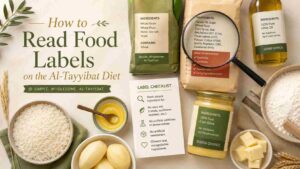
Food labels can tell you whether a packaged food is simple, recognizable, and suitable for the Al-Tayyibat Diet.
If you are starting the Al-Tayyibat Diet, one of the most useful skills you can learn is how to read food labels.
A product may look healthy from the front of the package.
In this guide, you will learn how to read food labels, spot seed oils, recognize long ingredient lists, and choose simpler packaged foods when fresh, whole foods are not available.
It may say:
- Natural
- Clean
- Light
- Fitness
- Low sugar
- High protein
- Heart healthy
- Plant-based
- Keto-friendly
- No added sugar
But the real story is usually on the back of the package.
The Al-Tayyibat approach teaches beginners to ask a simple question:
Is this food simple, pure, recognizable, and easy to understand?
Food labels can help you answer that question.
This beginner guide explains how to read food labels on the Al-Tayyibat Diet, how to spot seed oils, additives, sweeteners, long ingredient lists, processed foods, and how to choose simpler alternatives.
In this guide:
- Why food labels matter
- How to read ingredient lists
- Seed oils to watch for
- Hidden sweeteners and additives
- Misleading front-package claims
- Simple Al-Tayyibat food label rules
- Beginner food swaps
Why Food Labels Matter on the Al-Tayyibat Diet
The Al-Tayyibat Diet is not only about a list of foods.
It is also about food clarity.
A food may appear simple, but the label may reveal that it contains:
- Industrial seed oils
- Artificial flavors
- Artificial colors
- Preservatives
- Sweeteners
- Emulsifiers
- Stabilizers
- Fillers
- Long ingredient lists
- Highly processed components
Reading labels helps you avoid being fooled by marketing.
The front of the package sells the product.
The ingredient list tells you what is actually inside.
Food Labels Rule 1: Read the Ingredient List First
Before reading calories, protein, carbs, or fat, read the ingredient list.
On the Al-Tayyibat Diet, the ingredient list is often more important than the nutrition numbers.
Ask:
- Do I recognize the ingredients?
- Is the list short?
- Could this be made in a home kitchen?
- Are there seed oils?
- Are there artificial flavors or colors?
- Are there many additives?
- Is there a simpler option?
A short, recognizable ingredient list is usually easier to understand than a long, confusing one.
The “Short List” Rule
A beginner-friendly rule is:
The shorter the ingredient list, the easier the food is to understand.
This does not mean every packaged food with several ingredients is automatically bad.
But when a food has a very long ingredient list, it usually means the food has been heavily processed or engineered.
For beginners, choose foods with:
- Fewer ingredients
- Recognizable ingredients
- Basic kitchen ingredients
- No unnecessary additives
- No seed oils when possible
- No confusing chemical-sounding lists
The goal is not fear.
The goal is clarity.
Watch for Industrial Seed Oils
One of the most important label-reading steps is checking for seed oils.
In the Al-Tayyibat framework, industrial seed oils are often considered avoid-first ingredients because they commonly appear in processed foods.
Look for:
- Corn oil
- Sunflower oil
- Soybean oil
- Canola oil
- Cottonseed oil
- Grapeseed oil
- Safflower oil
- Rice bran oil
- Mixed vegetable oils
- Generic vegetable oil
- Margarine
- Shortening
These oils may appear in foods that do not look oily.
Check labels on:
- Bread
- Crackers
- Chips
- Cookies
- Pastries
- Sauces
- Dressings
- Frozen meals
- Snack bars
- Processed meats
- Ready-made marinades
- “Healthy” packaged snacks
A simple Al-Tayyibat swap is to choose foods made with simpler fats, such as pure ghee or butter, when appropriate for you.
Do Not Trust the Front of the Package
Food packaging is designed to make products look attractive.
A product may say:
Natural
But still contain seed oils and additives.
A product may say:
Healthy
But still has a long ingredient list.
A product may say:
High protein
But still include sweeteners, gums, flavors, and processed fillers.
A product may say:
Keto
But still contain industrial oils and artificial ingredients.
A product may say:
No sugar added
But still contain artificial sweeteners or highly processed ingredients.
On the Al-Tayyibat Diet, do not judge the food by the front.
Turn the package around.
Read the ingredients.
Look for Artificial Flavors and Colors
Artificial flavors and colors are common in processed foods.
Look for words like:
- Artificial flavor
- Natural flavor
- Flavoring
- Artificial color
- Color added
- Red 40
- Yellow 5
- Blue 1
- Caramel color
Some labels may use broad terms like “natural flavors.”
Even though the word “natural” sounds good, it does not always mean the food is simple or close to a basic ingredient.
If the flavor needs to be manufactured and added back into the food, that is a sign the food may be more processed than it appears.
Watch for Preservatives
Preservatives are used to extend shelf life.
They may appear in:
- Packaged bread
- Sauces
- Processed meats
- Snack foods
- Packaged desserts
- Ready-made meals
Examples may include:
- Sodium benzoate
- Potassium sorbate
- Calcium propionate
- BHT
- BHA
- Sodium nitrite
- Sodium nitrate
Not every preservative means immediate danger.
But for Al-Tayyibat beginners, the presence of multiple preservatives is a signal to ask:
Is there a simpler version of this food?
Watch for Hidden Sweeteners
Sweeteners can appear under many names.
Look for:
- Sugar
- Cane sugar
- Glucose
- Fructose
- Dextrose
- Maltose
- Corn syrup
- High-fructose corn syrup
- Rice syrup
- Barley malt syrup
- Invert sugar
- Agave syrup
- Artificial sweeteners
- Sucralose
- Aspartame
- Acesulfame potassium
- Saccharin
Some sweet foods may fit some people in small amounts, such as honey, if appropriate.
But many processed foods contain hidden sweeteners that make the food harder to understand.
If you have diabetes, insulin resistance, blood sugar concerns, or take medication that affects blood sugar, speak with a qualified healthcare professional before changing sweet foods or carbohydrate intake.
Watch for Gums, Thickeners, and Emulsifiers
Many processed foods use gums and emulsifiers to improve texture.
Common examples include:
- Xanthan gum
- Guar gum
- Carrageenan
- Cellulose gum
- Lecithin
- Mono- and diglycerides
- Polysorbate
- Modified starch
These ingredients are common in packaged products such as:
- Sauces
- Dressings
- Ice cream
- Plant-based products
- Packaged drinks
- Low-fat products
- Protein snacks
- Processed desserts
A beginner Al-Tayyibat approach usually favors foods that do not need many texture modifiers.
Watch for Modified Ingredients
Some labels include ingredients that show a food has been heavily altered.
Examples may include:
- Modified food starch
- Hydrolyzed protein
- Textured vegetable protein
- Isolated soy protein
- Maltodextrin
- Hydrogenated oils
- Partially hydrogenated oils
- Artificial fiber blends
These ingredients may appear in foods marketed as:
- Fitness foods
- Protein foods
- Diet snacks
- Low-fat snacks
- Plant-based alternatives
- Breakfast products
A simple rule:
If the ingredient list looks more like a chemistry formula than food, choose something simpler.
How to Read Bread Labels
Bread is one of the most important foods to check.
A simple bread may contain basic ingredients.
But commercial bread often contains:
- Seed oils
- Dough conditioners
- Preservatives
- Sweeteners
- Emulsifiers
- Artificial flavors
- Long ingredient lists
When reading bread labels, check for:
- Sunflower oil
- Soybean oil
- Canola oil
- Vegetable oil
- Calcium propionate
- Mono- and diglycerides
- Added sugars
- Long ingredient lists
A better option may be homemade bread or simple bread made with basic ingredients, if bread suits your body.
How to Read Snack Labels
Snack foods are often highly processed.
Check labels on:
- Chips
- Crackers
- Cookies
- Granola bars
- Protein bars
- Breakfast bars
- Packaged sweets
- Snack mixes
Watch for:
- Seed oils
- Artificial flavors
- Sweeteners
- Preservatives
- Gums
- Long ingredient lists
- “Healthy” marketing claims
Many packaged snacks are designed to look healthier than they are.
An Al-Tayyibat-style snack may be much simpler:
- Rice with ghee
- Peeled potatoes with butter
- Homemade bread with butter
- Plain green tea
- A small simple meal
How to Read Sauce and Dressing Labels
Sauces and dressings often contain hidden seed oils and additives.
Check labels on:
- Salad dressing
- Mayonnaise
- Ketchup
- BBQ sauce
- Ready-made marinades
- Bottled sauces
- Dips
- Condiments
Look for:
- Soybean oil
- Canola oil
- Sunflower oil
- Corn syrup
- Preservatives
- Artificial flavors
- Gums
- Long ingredient lists
A simpler option may be:
- Ghee
- Butter
- Simple herbs
- Lemon, if tolerated
- Homemade sauce with basic ingredients
How to Read Drink Labels
Drinks can be a major source of hidden ingredients.
Check labels on:
- Soda
- Energy drinks
- Bottled teas
- Flavored waters
- Sports drinks
- Juice drinks
- Protein drinks
- “Healthy” beverages
Watch for:
- Sugar
- Corn syrup
- Artificial sweeteners
- Artificial flavors
- Artificial colors
- Preservatives
- Caffeine blends
- Long ingredient lists
Simple drink options include:
- Water
- Plain green tea
- Simple warm drinks without artificial flavors
A drink should not need a long ingredient list.
How to Read Frozen Meal Labels
Frozen meals often look convenient, but they can contain many additives.
Check for:
- Seed oils
- Modified starches
- Processed sauces
- Artificial flavors
- Preservatives
- Processed meats
- Long ingredient lists
Instead of a frozen meal, use the simple plate formula:
Base + Fat + Protein + Simple Drink
Examples:
- White rice + ghee + fresh beef + water
- Peeled potatoes + butter + fish + green tea
- Rice + lamb + water
- Potatoes + ghee + fresh protein
This is usually clearer than a packaged meal.
“Healthy” Labels That Can Be Misleading
Be careful with marketing terms such as:
- Natural
- Clean
- Low carb
- Keto
- Vegan
- Plant-based
- Gluten-free
- Sugar-free
- High protein
- Low fat
- Fitness
- Heart healthy
- Light
These words do not automatically mean the food fits the Al-Tayyibat approach.
A product can be gluten-free and still highly processed.
A product can be keto and still contain additives.
A product can be high protein and still contain artificial flavors.
A product can be vegan and still contain seed oils and fillers.
Always read the ingredient list.
The Al-Tayyibat Label Test
Use this quick test before buying a packaged food.
Ask:
- Is the ingredient list short?
- Do I recognize most ingredients?
- Does it contain seed oils?
- Does it contain artificial flavors or colors?
- Does it contain many preservatives?
- Does it contain hidden sweeteners?
- Does it need many gums, thickeners, or emulsifiers?
- Is there a simpler version?
- Could I build a meal from more basic foods instead?
- Does this food make my choices clearer or more confusing?
If the food fails many of these questions, choose something simpler.
Simple Label Reading Examples
Example 1: Crackers
If crackers contain wheat flour, soybean oil, sugar, flavoring, preservatives, and emulsifiers, they may not be a simple choice.
A simpler snack might be:
- Homemade bread with butter
- Rice with ghee
- Potatoes with butter
Example 2: Bottled Green Tea
A bottle may say green tea, but the label may include sugar, flavoring, preservatives, and acids.
A simpler option:
- Plain brewed green tea
Example 3: Bread
A packaged bread may contain flour, seed oils, sugar, preservatives, emulsifiers, and dough conditioners.
A simpler option:
- Homemade bread
- Simple bread with fewer ingredients
Example 4: Sauce
A sauce may contain soybean oil, corn syrup, gums, preservatives, and flavors.
A simpler option:
- Butter
- Ghee
- Simple herbs
- Homemade sauce with basic ingredients
How to Use Food Labels While Shopping
When shopping, follow this simple process:
- Choose basic foods first.
- Read labels on packaged foods.
- Avoid seed oils when possible.
- Choose shorter ingredient lists.
- Avoid foods with many additives.
- Do not trust front-label marketing.
- Compare two similar products and choose the simpler one.
- Buy fewer packaged foods over time.
The goal is not to become perfect in one shopping trip.
The goal is to get better at noticing.
Best Beginner Foods That Do Not Need Labels
Some of the easiest foods are the ones that do not need a complicated label.
Examples:
- White rice
- Peeled potatoes
- Fresh beef
- Fresh lamb
- Fresh fish
- Butter
- Pure ghee
- Honey, if appropriate
- Plain green tea
- Water
Simple foods are easier to understand.
That is why the Al-Tayyibat approach often begins with them.
Common Food Labels Mistakes Beginners Make
Mistake 1: Looking Only at Calories
Calories matter in some contexts, but they do not tell you how processed a food is.
Read ingredients first.
Mistake 2: Trusting “Natural” Claims
Natural does not always mean simple.
Mistake 3: Ignoring Seed Oils
Seed oils often appear in foods that look harmless.
Mistake 4: Buying Packaged “Health Foods”
Many health foods are still highly processed.
Mistake 5: Trying to Understand Everything at Once
You do not need to memorize every ingredient.
Start with the obvious ones:
- Seed oils
- Artificial flavors
- Long ingredient lists
- Hidden sweeteners
- Preservatives
A 7-Day Label Reading Challenge
Try this simple challenge.
Day 1
Read labels on drinks.
Replace sugary or flavored drinks with water or plain green tea.
Day 2
Read labels on bread.
Look for seed oils, preservatives, and long ingredient lists.
Day 3
Read labels on snacks.
Notice seed oils and artificial flavors.
Day 4
Read labels on sauces.
Check for soybean oil, canola oil, corn syrup, gums, and preservatives.
Day 5
Read labels on frozen meals.
Notice how many ingredients they contain.
Day 6
Compare two similar products.
Choose the one with the shorter, clearer ingredient list.
Day 7
Build one meal from foods with no complicated labels.
Example:
White rice
Ghee
Fresh beef
Water
Label Reading Tracking Template
Use this simple format:
Product name:
Number of ingredients:
Seed oils?
Sweeteners?
Artificial flavors or colors?
Preservatives?
Simpler alternative:
Would I buy it again?
This helps you learn without overthinking.
Who Should Be Careful?
Speak with a qualified healthcare professional before making major diet changes if you:
- Have diabetes
- Have blood sugar issues
- Take medication
- Are pregnant or breastfeeding
- Have kidney disease
- Have liver disease
- Have cardiovascular disease
- Have autoimmune disease
- Have digestive disease
- Have food allergies
- Have a history of eating disorders
- Follow a medically restricted diet
- Are underweight or recovering from illness
This is especially important if your changes affect carbohydrates, medication needs, blood sugar, or major food groups.
Download the Free Al-Tayyibat Starter Kit
If you want a printable beginner guide, download the free Al-Tayyibat Starter Kit.
It includes:
- Beginner food list
- Tayyibat vs Khabaith quick guide
- First grocery run checklist
- 3-day starter meal framework
- Common beginner mistakes
- Safety notes before starting
Download it here:
Get the Full Al-Tayyibat System Book
The full book goes deeper into the complete Al-Tayyibat framework and includes food lists, shopping guidance, meal frameworks, common mistakes, and practical troubleshooting for beginners.
Learn more here:
Related Guides
Read these next:
Al-Tayyibat Grocery Shopping Guide
How to Build a Simple Al-Tayyibat Plate
Final Thoughts
Reading food labels is one of the most important beginner skills on the Al-Tayyibat Diet.
Do not rely on the front of the package.
Read the ingredient list.
Look for seed oils, artificial flavors, preservatives, sweeteners, additives, and long ingredient lists.
Choose simpler foods when possible.
The goal is not fear.
The goal is clarity.
Medical Disclaimer
This article is for educational purposes only and does not provide medical advice, diagnosis, or treatment. Always consult a qualified healthcare professional before changing your diet, especially if you have a medical condition, take medication, are pregnant or breastfeeding, have diabetes, or have another chronic condition.
About the Author
This article was reviewed and published by the Tayyibat Diet Guide Editorial Team.
Learn more about our editorial team here.