Al-Tayyibat Diet FAQ: Common Beginner Questions Answered
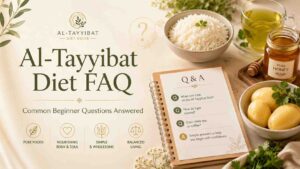
If you are new to the Al-Tayyibat Diet, you may have questions about food lists, meal plans, seed oils, safety, bloating, histamine, keto, carnivore, and how to start without overthinking.
This Al-Tayyibat Diet FAQ answers common beginner questions in a simple, balanced way.
The goal is not to give medical advice.
The goal is to help beginners understand the framework clearly and use it responsibly.
1. What Is the Al-Tayyibat Diet?
The Al-Tayyibat Diet is a pure food framework based on the difference between Tayyibat foods and Khabaith foods.
In simple terms:
Tayyibat foods are pure, simple, recognizable, and easier to build meals around.
Khabaith foods are highly processed, industrially altered, full of additives, or harder to recognize as basic ingredients.
The beginner goal is not perfection.
The beginner goal is clarity.
2. What Are Tayyibat Foods?
Tayyibat foods are usually simple, recognizable foods that are easier to understand and prepare.
Common beginner examples may include:
- White rice
- Peeled potatoes
- Pure ghee
- Butter
- Fresh beef
- Fresh lamb
- Fresh fish
- Honey, if appropriate
- Plain green tea
- Water
- Simple homemade meals
This does not mean every person must eat every food on the list.
Personal tolerance, medical needs, culture, and food access all matter.
3. What Are Khabaith Foods?
Khabaith foods are often foods that are highly processed, industrially altered, full of additives, or harder to recognize as basic ingredients.
Common beginner examples may include:
- Industrial seed oils
- Commercial pastries
- Ultra-processed snacks
- Artificially flavored drinks
- Packaged foods with long ingredient lists
- Processed sauces
- Foods fried in vegetable oils
- Processed meats with fillers or additives
The point is not fear.
The point is to reduce confusion and start with simpler foods.
4. Is the Al-Tayyibat Diet a Medical Treatment?
No.
The Al-Tayyibat Diet should not be presented as a cure, treatment, or guaranteed solution for disease.
It is a food simplification framework.
It may help beginners think more clearly about food quality, processing, ingredient lists, and meal structure.
But it does not replace medical care, diagnosis, medication, lab testing, professional nutrition guidance, or treatment plans.
5. Is the Al-Tayyibat Diet Safe?
For many healthy adults, using the Al-Tayyibat framework to reduce ultra-processed foods and simplify meals may be a reasonable educational starting point.
But safety depends on your health situation, medication use, food tolerance, and how extreme your changes become.
Speak with a qualified healthcare professional before changing your diet if you:
- Have diabetes
- Have blood sugar issues
- Take medication
- Are pregnant or breastfeeding
- Have kidney disease
- Have liver disease
- Have cardiovascular disease
- Have autoimmune disease
- Have digestive disease
- Have food allergies
- Have a history of eating disorders
- Follow a medically restricted diet
- Are underweight or recovering from illness
Carbohydrates can have a major effect on blood sugar, so people with diabetes or blood sugar concerns should get individualized guidance before changing carbohydrate intake.
6. Is the Al-Tayyibat Diet Low Carb?
No.
The Al-Tayyibat Diet is not automatically low carb.
It may include foods such as:
- White rice
- Peeled potatoes
- Honey
- Homemade bread
- Green tea
- Fresh proteins
- Ghee or butter
The main focus is not carbohydrate restriction.
The main focus is food purity, simplicity, and reducing highly processed foods.
7. Is the Al-Tayyibat Diet the Same as Keto?
No.
Keto focuses on very low carbohydrate intake.
The Al-Tayyibat Diet focuses on simple, pure, recognizable foods.
Keto asks:
Is this food low enough in carbs?
The Al-Tayyibat framework asks:
Is this food pure, simple, recognizable, and low in industrial processing?
A packaged keto snack may be low-carb, but it may still contain additives, seed oils, or a long ingredient list.
8. Is the Al-Tayyibat Diet the Same as Carnivore?
No.
Carnivore focuses mostly or entirely on animal foods.
The Al-Tayyibat Diet may include animal foods, but it may also include rice, potatoes, honey, green tea, and homemade bread.
Carnivore asks:
Is this food animal-based?
The Al-Tayyibat framework asks:
Is this food pure, simple, recognizable, and low in industrial processing?
9. Do I Have to Give Up Rice?
No.
Rice may appear as a simple base in the Al-Tayyibat beginner framework.
Many beginner meal examples use white rice with ghee and fresh protein.
However, rice may not be appropriate for everyone in the same amount.
People with diabetes, insulin resistance, or blood sugar concerns should seek professional advice because carbohydrate foods can affect blood glucose.
10. Do I Have to Give Up Potatoes?
No.
Peeled potatoes may appear as a simple food foundation in beginner Al-Tayyibat meals.
Examples include:
- Potatoes + butter
- Potatoes + fish
- Potatoes + ghee + fresh protein
However, personal tolerance matters.
Some people tolerate potatoes well. Others may need to adjust based on blood sugar, digestion, or medical guidance.
11. Can I Eat Bread?
Bread depends on the ingredients and your personal tolerance.
The Al-Tayyibat approach favors simple, recognizable foods.
Homemade bread or carefully selected bread with basic ingredients may fit better than commercial bread with seed oils, preservatives, dough conditioners, sweeteners, and long ingredient lists.
A simple rule:
Read the ingredient label.
12. Can I Use Honey?
Honey may appear in some beginner Al-Tayyibat examples, usually in small amounts.
But honey is not appropriate for everyone.
If you have diabetes, insulin resistance, blood sugar concerns, or take blood sugar medication, speak with a qualified healthcare professional before using honey regularly.
13. Why Are Seed Oils Avoided First?
In the Al-Tayyibat framework, industrial seed oils are often avoided first because they commonly appear in highly processed foods and are easy to identify on labels.
Common examples include:
- Corn oil
- Sunflower oil
- Soybean oil
- Canola oil
- Mixed vegetable oils
- Generic vegetable oil
They may appear in:
- Crackers
- Chips
- Packaged bread
- Pastries
- Sauces
- Frozen meals
- Restaurant food
- Processed snacks
Avoiding them first can make grocery shopping simpler.
14. What Should I Buy First?
A simple first grocery list may include:
- White rice
- Peeled potatoes
- Pure ghee
- Butter
- Fresh beef
- Fresh lamb
- Fresh fish
- Honey, if appropriate
- Plain green tea
- Water
- Fresh herbs
- Simple bread ingredients, if used
Do not overbuy.
A short grocery list is easier to follow than a complicated one.
15. What Is the Simplest Al-Tayyibat Meal Formula?
Use this formula:
Base + Fat + Protein + Simple Drink
Examples:
- White rice + ghee + fresh beef + water
- Peeled potatoes + butter + fish + green tea
- Rice + lamb + water
- Homemade bread + butter + honey + warm drink
This formula helps beginners stop overthinking meals.
16. What Is a Simple 3-Day Starter Plan?
A simple 3-day beginner framework may look like this:
Day 1
Breakfast
Homemade bread
Butter
Small amount of honey
Plain green tea or water
Lunch
White rice
Ghee
Fresh beef or lamb
Water
Dinner
Peeled potatoes
Butter
Fresh fish or simple warm drink
Day 2
Breakfast
White rice
Small amount of ghee
Plain green tea
Lunch
Fresh fish
White rice
Water
Dinner
Peeled potatoes
Butter
Simple warm drink
Day 3
Breakfast
Homemade bread
Butter
Honey, if appropriate
Water or plain green tea
Lunch
White rice
Ghee
Fresh protein
Water
Dinner
Peeled potatoes
Butter
Simple warm drink
This is educational only, not a medical meal plan.
17. Can the Al-Tayyibat Diet Help With Bloating?
The Al-Tayyibat Diet should not be presented as a cure for bloating.
Bloating can have many causes, including food intolerance, constipation, stress, large meals, carbonated drinks, digestive disorders, medications, and other medical issues.
However, simple meals may help some beginners observe patterns more clearly.
If bloating is severe, persistent, painful, sudden, or paired with warning signs such as weight loss, blood in stool, vomiting, fever, or severe abdominal pain, seek medical advice.
18. What About Histamine?
Histamine issues can be complex.
Freshness, leftovers, fermentation, food storage, allergies, medications, enzymes, gut health, and individual tolerance may all matter.
The Al-Tayyibat framework may overlap with histamine awareness because it emphasizes simple, fresh, recognizable foods.
But it is not a medical low-histamine diet and should not be treated as a cure.
If you suspect histamine intolerance, allergy, or mast cell issues, speak with a qualified healthcare professional.
19. Are Leftovers Allowed?
Leftovers may be useful, especially for busy beginners, but food safety matters.
USDA guidance says leftovers should be refrigerated within 2 hours after cooking or after being removed from a warm-holding appliance. FDA guidance also emphasizes the two-hour rule for foods that need refrigeration.
If you cannot eat leftovers within a few days, freezing them can be safer than keeping them too long. Mayo Clinic notes that leftovers can generally be kept for 3 to 4 days in the refrigerator before food poisoning risk increases.
20. What If I Am Too Busy to Cook?
Use the simplest possible meal formula:
Base + Fat + Protein + Simple Drink
Prepare a short list of emergency meals:
- Rice + ghee
- Potatoes + butter
- Bread + butter + honey
- Rice + fresh protein
- Potatoes + fish
Busy beginners do not need 20 recipes.
They need 3 to 5 repeatable meals.
21. What Are the Best Food Swaps?
Simple beginner swaps include:
| Instead of This | Try This |
|---|---|
| Seed oils | Pure ghee or butter |
| Sugary drinks | Water or plain green tea |
| Commercial pastries | Homemade bread with butter |
| Ultra-processed snacks | Simple meals |
| Frozen dinners | Base + fat + protein |
| Processed meats | Fresh beef, lamb, or fish |
| Long ingredient lists | Short ingredient lists |
Start with one swap per week if you are overwhelmed.
22. What Breakfast Ideas Fit the Al-Tayyibat Diet?
Simple breakfast ideas may include:
- Homemade bread + butter + honey + green tea
- White rice + ghee + water
- Peeled potatoes + butter + warm drink
- Rice + fresh protein + water
Avoid starting the day with commercial pastries, sugary drinks, or ultra-processed breakfast bars.
23. What Dinner Ideas Fit the Al-Tayyibat Diet?
Simple dinner ideas may include:
- White rice + ghee + fresh beef
- Peeled potatoes + butter + fish
- Rice + lamb + water
- Potatoes + ghee + fresh protein
- Homemade bread + butter + simple warm drink
Keep dinner clear, repeatable, and easy to prepare.
24. What Are the Most Common Beginner Mistakes?
Common beginner mistakes include:
- Changing everything overnight
- Eating too little
- Becoming afraid of food
- Ignoring medical conditions
- Ignoring personal tolerance
- Keeping hidden seed oils
- Buying too many specialty foods
- Making meal planning too complicated
- Not tracking your response
- Treating the system like a cure
The safer approach is gradual, simple, and realistic.
25. How Do I Start Today?
Start with three simple actions:
- Replace sugary drinks with water or plain green tea.
- Read labels and notice seed oils.
- Build one simple meal using base + fat + protein.
Example:
White rice + ghee + fresh beef + water
You do not need a perfect plan to begin.
You need one clear next step.
Download the Free Al-Tayyibat Starter Kit
If you want a printable beginner guide, download the free Al-Tayyibat Starter Kit.
It includes:
- Beginner food list
- Tayyibat vs Khabaith quick guide
- First grocery run checklist
- 3-day starter meal framework
- Common beginner mistakes
- Safety notes before starting
Download it here:
Get the Full Al-Tayyibat System Book
The full book goes deeper into the complete Al-Tayyibat framework and includes the 7-Day Reset, 21-Day Protocol, food lists, shopping guidance, daily meal frameworks, common mistakes, and troubleshooting for beginners.
Learn more here:
Related Guides
Read these next:
Final Thoughts
The Al-Tayyibat Diet does not need to be complicated.
Start with simple foods. Avoid the clearest processed foods. Read labels. Eat enough. Track your response. Get medical guidance when needed.
The goal is not perfection.
The goal is clarity.
Medical Disclaimer
This article is for educational purposes only and does not provide medical advice, diagnosis, or treatment. Always consult a qualified healthcare professional before changing your diet, especially if you have a medical condition, take medication, are pregnant or breastfeeding, have diabetes, or have another chronic condition.
About the Author
This article was reviewed and published by the Tayyibat Diet Guide Editorial Team.
Learn more about our editorial team here.