
Al-Tayyibat Grocery Shopping Guide: What to Buy First
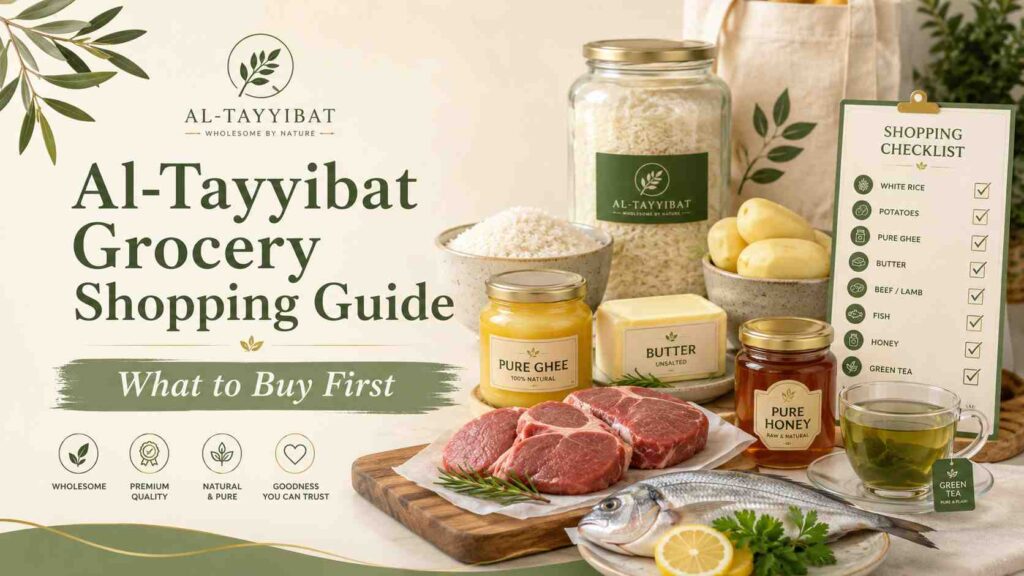
This Al-Tayyibat grocery guide brings your shopping list and essential kitchen staples together in one practical resource. It explains what to buy first, what to keep in the pantry, fridge, and freezer, how to read packaged-food labels, and how to avoid buying foods that will not support your weekly meals.
If you are new to the Al-Tayyibat Diet, your first grocery trip can feel confusing.
This Al-Tayyibat grocery shopping guide will help you know what to buy first, what to avoid first, and how to keep your first shopping list simple.
The goal is not to buy everything.
The goal is to start with a few simple, pure, recognizable foods that make beginner meals easier.
What Is the Goal of an Al-Tayyibat Grocery List?
The goal of your first Al-Tayyibat grocery list is clarity.
You want foods that are:
- Simple
- Recognizable
- Easy to prepare
- Lower in additives
- Useful for basic meals
- Easier to understand than packaged processed foods
The Al-Tayyibat system is not about buying trendy health foods. It is about returning to basic foods that are easier to recognize and easier to build meals around.
Start With the Core Rule
Before you shop, remember the basic rule:
Choose foods that are pure, simple, recognizable, and close to basic homemade ingredients.
Avoid starting with complicated recipes, expensive specialty products, or long supplement lists.
Your first grocery trip should be simple.
What to Buy First
Here are beginner-friendly grocery categories to start with.
1. White Rice
White rice is one of the simplest meal foundations in the Al-Tayyibat beginner framework.
It is easy to prepare, easy to combine with fats and proteins, and easy to repeat.
Simple meal ideas:
- White rice + ghee + fresh beef
- White rice + butter + fish
- White rice + lamb + water
- White rice + ghee + simple warm drink
The goal is not to make rice magical. The goal is to use simple foods that are easy to understand.
2. Peeled Potatoes
Peeled potatoes are another simple food foundation.
They can be boiled, mashed, or served with butter.
Simple meal ideas:
- Peeled potatoes + butter + fish
- Boiled potatoes + ghee + fresh meat
- Potatoes + simple protein + water
- Potatoes + butter + green tea
Potatoes are useful because they are easy to recognize and easy to prepare.
3. Pure Ghee
Pure ghee is a traditional fat that can be used with rice, potatoes, and simple meals.
When shopping, look for:
- Pure ghee
- Short ingredient list
- No vegetable oils added
- No artificial flavoring
- No unnecessary additives
Avoid products labeled as ghee blends if they contain seed oils or long ingredient lists.
4. Butter
Butter can also be used in simple meals.
Look for plain butter with a short ingredient list.
Simple uses:
- Butter on potatoes
- Butter with homemade bread
- Butter with simple warm meals
Avoid butter-like spreads with seed oils, emulsifiers, artificial flavors, or long ingredient lists.
5. Fresh Beef
Fresh beef can be used as a simple protein source.
Look for fresh, plain cuts without marinades, breading, or sauces.
Avoid:
- Processed meat products with long ingredient lists
- Meat with added fillers
- Packaged flavored meats
- Fried meat prepared in vegetable oils
- Sauced meats with additives
Fresh, plain protein is easier to understand than processed meat products.
6. Fresh Lamb
Fresh lamb is another simple protein option.
Like beef, choose plain cuts without processed sauces or flavor packets.
Simple meal ideas:
- Lamb + rice
- Lamb + potatoes
- Lamb + ghee
- Lamb + water or plain tea
Keep the first meals predictable and simple.
7. Fresh Fish
Fresh fish can fit well into beginner Al-Tayyibat meals.
Look for:
- Fresh fish
- Frozen plain fish
- No breading
- No added sauces
- No seed oil frying
- No long ingredient list
Simple meal ideas:
- Fish + white rice
- Fish + potatoes
- Fish + butter
- Fish + green tea
8. Honey
Pure honey may be used in small amounts depending on your needs and tolerance.
Look for:
- Pure honey
- No added syrups
- No artificial flavors
- No long ingredient list
Important note: honey may not be appropriate for everyone, especially people with diabetes or blood sugar concerns. If you have blood sugar issues, speak with a qualified healthcare professional before using honey regularly.
9. Plain Green Tea
Plain green tea is a simple drink option.
Look for:
- Plain green tea
- No artificial flavors
- No sweeteners
- No “energy” blends
- No unnecessary additives
You can also choose water or other simple drinks without artificial flavoring.
10. Homemade Bread Ingredients
If homemade bread is part of your starter approach, keep it simple.
Basic ingredients may include:
- Whole wheat flour
- Water
- Salt
- Simple traditional fat, depending on recipe
Avoid commercial breads with long ingredient lists, seed oils, preservatives, dough conditioners, artificial flavors, or unnecessary additives.
Simple First Grocery List
Here is a basic first grocery list:
Staples
- White rice
- Peeled potatoes
- Whole wheat flour or simple homemade bread ingredients
Fats
- Pure ghee
- Butter
Proteins
- Fresh beef
- Fresh lamb
- Fresh fish
Sweet Foods
- Pure honey
- Seedless jam, if appropriate and low in unnecessary additives
Drinks
- Water
- Plain green tea
Optional Extras
- Fresh herbs
- Lemon
- Simple spices without additives
- Simple homemade meal ingredients
Do not overbuy.
Choose a few foods you can actually prepare and repeat.
What to Avoid First
Your first shopping trip should also include an avoid-first list.
Start by avoiding the clearest Khabaith foods.
Avoid Industrial Seed Oils
Common seed oils include:
- Corn oil
- Sunflower oil
- Soybean oil
- Canola oil
- Mixed vegetable oils
- Generic vegetable oil
These often appear in packaged foods, fried foods, sauces, pastries, snacks, and processed breads.
Avoid Ultra-Processed Snacks
Examples include:
- Chips
- Packaged cookies
- Candy
- Snack cakes
- Artificially flavored crackers
- Sweet snack bars
- Processed “healthy” snacks with long ingredient lists
If a snack has many unfamiliar ingredients, choose something simpler.
Avoid Commercial Pastries
Commercial pastries often contain:
- Seed oils
- Shortening
- Artificial flavors
- Preservatives
- Refined ingredients
- Long ingredient lists
These are usually easy avoid-first foods for beginners.
Avoid Artificially Flavored Drinks
Avoid drinks that contain:
- Artificial flavors
- Artificial colors
- High-friction sweeteners
- Preservatives
- Long ingredient lists
Choose water, plain green tea, or simple warm drinks instead.
Avoid Long Ingredient Lists
A simple beginner rule:
If the ingredient list is long, confusing, or full of words you do not recognize, choose something simpler.
This rule alone can make grocery shopping much easier.
How to Read Labels
When shopping, check ingredient labels before buying packaged foods.
Look for:
- Seed oils
- Artificial flavors
- Artificial colors
- Preservatives
- Emulsifiers
- Stabilizers
- Sweeteners
- “Vegetable oil”
- “Natural flavor” in heavily processed products
- Long lists of unfamiliar ingredients
This does not mean every packaged food is automatically bad.
It means beginners should learn to recognize high-friction foods and choose simpler options first.
Simple Meal Formula for Your First Groceries
Use this formula:
Base + Fat + Protein + Simple Drink
Examples:
- White rice + ghee + fresh beef + water
- Peeled potatoes + butter + fish + green tea
- Homemade bread + butter + honey + warm tea
- Rice + lamb + water
This formula helps turn groceries into meals without complicated planning.
First 3 Meals to Try
Here are three simple meal ideas from your first grocery run.
Meal 1
White rice
Ghee
Fresh beef
Water
Meal 2
Peeled potatoes
Butter
Fresh fish
Plain green tea
Meal 3
Homemade bread
Butter
Small amount of honey
Simple warm drink
These are not strict medical meal plans. They are examples of simple beginner meal structures.
Grocery Shopping Mistakes to Avoid
Mistake 1: Buying Too Much
Beginners often buy too many ingredients at once.
Start small.
Buy enough to build a few simple meals.
Mistake 2: Buying “Healthy” Processed Foods
Many products look healthy but contain long ingredient lists, seed oils, gums, flavors, and sweeteners.
Read the label.
Mistake 3: Ignoring Your Own Tolerance
A food can be simple and still not suit you personally.
Pay attention to how you feel after meals.
Mistake 4: Making the First Week Too Complicated
Do not start with complicated recipes.
Start with simple meals you can repeat.
Mistake 5: Treating the List Like a Medical Prescription
This grocery guide is educational.
It is not personalized medical nutrition advice.
Who Should Be Careful?
Speak with a qualified healthcare professional before changing your diet if you:
- Have diabetes
- Have blood sugar issues
- Take prescription medication
- Are pregnant or breastfeeding
- Have kidney disease
- Have liver disease
- Have cardiovascular disease
- Have autoimmune disease
- Have a history of eating disorders
- Have food allergies
- Follow a medically restricted diet
This is especially important if your grocery changes affect carbohydrates, meal timing, medication needs, or food restrictions.
Pantry Staple 1: White Rice
White rice is one of the easiest Al-Tayyibat kitchen staples for beginners.
It is simple, recognizable, easy to prepare, and useful in many meals.
How to Use It
- Rice with ghee
- Rice with fresh beef
- Rice with lamb
- Rice with fish
- Small rice bowl as an emergency meal
Beginner Tip
Keep rice simple.
Avoid flavored rice packets with seed oils, artificial flavors, preservatives, or long ingredient lists.
Choose plain rice and prepare it yourself.
Pantry Staple 2: Simple Bread Ingredients
If bread is part of your Al-Tayyibat approach, it is better to keep simple bread ingredients at home than depend on commercial bread.
Basic bread ingredients may include:
- Flour
- Water
- Salt
- Simple traditional fat, depending on the recipe
Why This Matters
Many commercial breads contain:
- Seed oils
- Preservatives
- Dough conditioners
- Sweeteners
- Emulsifiers
- Artificial flavors
- Long ingredient lists
If bread suits your body, choose homemade bread or the simplest bread available.
Pantry Staple 3: Plain Green Tea
Plain green tea is a simple drink option.
It is easier to understand than bottled teas, energy drinks, flavored drinks, or sugary beverages.
Keep at Home
- Plain green tea
- Simple loose tea or tea bags
- No artificial flavors
- No sweetened bottled versions
Avoid
- Sweet bottled tea
- Energy tea blends
- Artificially flavored tea drinks
- Drinks with long ingredient lists
- “Diet” drinks full of artificial sweeteners
Simple drinks make the whole meal clearer.
Pantry Staple 4: Honey, If Appropriate
Pure honey may be kept as a simple sweet food, if appropriate for your health needs.
How to Use It
- Small amount with homemade bread
- Small amount with butter
- Small amount in a simple snack or light meal
Safety Note
Honey may not be appropriate for everyone.
If you have diabetes, insulin resistance, blood sugar concerns, or take medication that affects blood sugar, speak with a qualified healthcare professional before using honey regularly.
Pantry Staple 5: Simple Herbs and Spices
Simple herbs and spices can make meals more enjoyable without relying on processed sauces.
Examples:
- Parsley
- Mint
- Rosemary
- Thyme
- Simple salt
- Basic spices without additives
What to Avoid
Avoid seasoning blends with:
- Artificial flavors
- Added sugar
- Seed oils
- Anti-caking agents in excess
- “Natural flavor” in processed mixes
- Long ingredient lists
- MSG if you are avoiding additive-heavy blends
Simple herbs are usually easier to understand than packaged sauces.
Fridge Staple 1: Butter
Butter is a useful traditional fat in the Al-Tayyibat kitchen.
How to Use It
- Potatoes with butter
- Bread with butter
- Fish with butter
- Simple warm meals
What to Avoid
Avoid butter-like spreads made with:
- Vegetable oils
- Margarine
- Canola oil
- Soybean oil
- Sunflower oil
- Artificial flavors
- Emulsifiers
- Long ingredient lists
Choose plain butter with a short ingredient list.
Fridge Staple 2: Fresh Beef
Fresh beef can be used as a simple protein.
How to Use It
- Beef with rice
- Beef with potatoes
- Beef with ghee
- Beef as part of a simple plate
What to Avoid
Avoid processed beef products with:
- Fillers
- Breading
- Seed oils
- Artificial flavors
- Processed sauces
- Long ingredient lists
- Ready-made marinades
Plain fresh protein is easier to understand than processed meat products.
Fridge Staple 3: Fresh Lamb
Fresh lamb is another simple protein option.
How to Use It
- Lamb with rice
- Lamb with potatoes
- Lamb with ghee or butter
- Lamb with water or plain green tea
Beginner Tip
Keep preparation simple.
Avoid heavy sauces, packaged marinades, and seasoning mixes with additives.
Fridge Staple 4: Fresh Fish
Fresh fish can be useful for simple Al-Tayyibat meals.
How to Use It
- Fish with potatoes
- Fish with rice
- Fish with butter
- Fish with simple herbs
What to Avoid
Avoid fish products that are:
- Breaded
- Deep-fried in vegetable oils
- Covered in processed sauces
- Flavored with long ingredient lists
- Highly processed or heavily preserved
Choose plain fish when possible.
Fridge Staple 5: Peeled Potatoes
Peeled potatoes can be kept ready for simple meals.
How to Use Them
- Potatoes with butter
- Potatoes with fish
- Potatoes with ghee
- Small potato bowl as an emergency meal
Beginner Tip
Potatoes are simple, but storage matters.
Store cooked potatoes safely, and pay attention to how your body responds to leftovers.
Freezer Staples
The freezer can help beginners avoid fast food and processed meals.
Useful freezer staples may include:
- Plain frozen fish
- Plain fresh meat portions
- Simple homemade bread portions
- Cooked rice portions, if tolerated
- Cooked potatoes, if tolerated
What to Avoid in the Freezer
Avoid filling the freezer with:
- Frozen pizza
- Frozen fried foods
- Frozen dinners with long labels
- Breaded meats
- Processed sauces
- Packaged meals full of additives
A freezer should make simple meals easier, not processed meals easier.
The Best Emergency Kitchen Staples
Emergency staples are foods that help you build a quick meal when you are tired or busy.
Keep these ready:
- White rice
- Peeled potatoes
- Pure ghee
- Butter
- Plain green tea
- Water
- Simple bread or bread ingredients
- Fresh or frozen plain protein
Emergency Meal Examples
- Rice + ghee
- Potatoes + butter
- Bread + butter
- Rice + beef
- Potatoes + fish
- Rice + lamb
- Green tea + simple snack
These meals are not fancy.
They are practical.
What Not to Keep at Home
If processed foods are easy to grab, they will be harder to avoid.
Consider reducing or removing:
- Chips
- Candy
- Commercial cookies
- Packaged pastries
- Sugary drinks
- Energy drinks
- Snack bars
- Frozen dinners
- Seed oil crackers
- Processed sauces
- Commercial breakfast foods
- Packaged “healthy” snacks with long ingredient lists
The goal is not fear.
The goal is to make the simpler choice easier.
Watch for Seed Oils
Seed oils often hide in packaged foods.
Check labels for:
- Corn oil
- Sunflower oil
- Soybean oil
- Canola oil
- Cottonseed oil
- Grapeseed oil
- Safflower oil
- Rice bran oil
- Mixed vegetable oils
- Generic vegetable oil
- Margarine
- Shortening
These may appear in:
- Bread
- Crackers
- Chips
- Sauces
- Dressings
- Frozen meals
- Pastries
- Snack bars
- Processed meats
A simple kitchen begins with simpler ingredients.
The Al-Tayyibat Kitchen Setup
A beginner kitchen can be organized into four simple zones.
Zone 1: Simple Bases
Keep:
- White rice
- Peeled potatoes
- Simple bread ingredients
Zone 2: Traditional Fats
Keep:
- Pure ghee
- Butter
Zone 3: Fresh Proteins
Keep:
- Fresh beef
- Fresh lamb
- Fresh fish
Zone 4: Simple Drinks
Keep:
- Water
- Plain green tea
- Simple warm drinks
This setup makes meal decisions easier.
How to Build Meals From Kitchen Staples
Once your kitchen is stocked, use the simple formula:
Base + Fat + Protein + Simple Drink
Meal 1
White rice
Ghee
Fresh beef
Water
Meal 2
Peeled potatoes
Butter
Fish
Plain green tea
Meal 3
Rice
Lamb
Water
Meal 4
Homemade bread
Butter
Honey, if appropriate
Simple warm drink
Meal 5
Potatoes
Ghee
Fresh protein
Water
You do not need complicated recipes to start.
Kitchen Staples for Breakfast
Simple breakfast staples:
- Homemade bread
- Butter
- Honey, if appropriate
- White rice
- Ghee
- Peeled potatoes
- Plain green tea
Breakfast Ideas
- Bread + butter + honey
- Rice + ghee
- Potatoes + butter
- Green tea + simple bread
- Rice + fresh protein
Avoid commercial pastries, sugary cereals, flavored drinks, and breakfast bars with long labels.
Kitchen Staples for Lunch
Simple lunch staples:
- White rice
- Peeled potatoes
- Ghee
- Butter
- Fresh beef
- Fresh lamb
- Fresh fish
- Water
Lunch Ideas
- Rice + ghee + beef
- Potatoes + butter + fish
- Rice + lamb
- Potatoes + fresh protein
- Simple bread + butter + protein
Lunch does not need to be complicated.
Kitchen Staples for Dinner
Simple dinner staples:
- Rice
- Potatoes
- Ghee
- Butter
- Fresh protein
- Plain green tea
- Water
Dinner Ideas
- Fish + potatoes + butter
- Beef + rice + ghee
- Lamb + rice + water
- Potatoes + ghee + protein
- Bread + butter + simple drink
A calm dinner can be simple and repeatable.
Kitchen Staples for Snacks
If you need snacks, keep them simple.
Useful snack staples:
- Homemade bread
- Butter
- Honey, if appropriate
- Rice
- Ghee
- Potatoes
- Plain green tea
Snack Ideas
- Bread + butter
- Bread + butter + honey
- Rice + ghee
- Potatoes + butter
- Green tea + simple snack
Avoid stocking chips, candy, snack cakes, and processed bars.
How to Shop for Kitchen Staples
When shopping, use this process:
- Buy simple bases first.
- Add traditional fats.
- Choose fresh protein.
- Choose simple drinks.
- Read labels on packaged foods.
- Avoid seed oils when possible.
- Avoid long ingredient lists.
- Do not overbuy.
A short shopping list is easier to use than a complicated one.
Simple Weekly Kitchen Checklist
Use this checklist once a week:
- Do I have rice?
- Do I have potatoes?
- Do I have ghee or butter?
- Do I have fresh protein?
- Do I have green tea or water?
- Do I have emergency meals?
- Did I remove processed snacks?
- Did I check labels?
- Did I avoid buying too many packaged foods?
This checklist helps keep the kitchen simple.
Download the Free Al-Tayyibat Starter Kit
If you want a printable beginner resource, download the free Al-Tayyibat Starter Kit.
It includes:
- Beginner food list
- Tayyibat vs Khabaith quick guide
- First grocery run checklist
- 3-day starter meal framework
- Common beginner mistakes
- Safety notes before starting
Download it here:
Get the Full Al-Tayyibat System Book
The full book goes deeper into the complete Al-Tayyibat framework and includes the 7-Day Reset, 21-Day Protocol, food lists, shopping guidance, meal frameworks, common mistakes, and practical troubleshooting for beginners.
Learn more here:
Related Guides
Read these next:
Al-Tayyibat 3-Day Starter Plan
Free Al-Tayyibat Shopping Guide PDF
How to Start the Al-Tayyibat Diet in 7 Days
Final Thoughts
Your first Al-Tayyibat grocery trip should be simple.
Start with a few basic foods. Avoid the clearest processed foods. Read labels. Build simple meals. Pay attention to your body. And avoid turning food into fear.
The best first grocery list is not the longest one.
It is the clearest one.
Medical Disclaimer
This article is for educational purposes only and does not provide medical advice, diagnosis, or treatment. Always consult a qualified healthcare professional before changing your diet, especially if you have a medical condition, take medication, are pregnant or breastfeeding, have diabetes, or have another chronic condition.
About the Author
This article was reviewed and published by the Tayyibat Diet Guide Editorial Team.
Learn more about our editorial team here.