
Al-Tayyibat Diet vs Keto: What’s the Difference?
If you are comparing the Al-Tayyibat Diet vs Keto, the biggest difference is this:
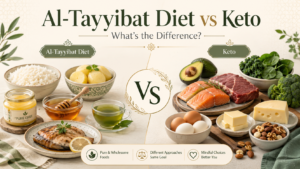
Keto starts with carbohydrate restriction.
The Al-Tayyibat Diet starts with food purity, simplicity, and reducing processed foods.
Both approaches may encourage people to avoid many processed foods, but they are not the same system. Keto is mainly built around macronutrient targets, especially low-carbohydrate intake. The Al-Tayyibat system is built around the difference between Tayyibat foods and Khabaith foods.
This guide explains the key differences, similarities, food examples, beginner safety notes, and which approach may make more sense depending on your goals.
Quick Comparison: Al-Tayyibat Diet vs Keto
| Category | Al-Tayyibat Diet | Keto Diet |
|---|---|---|
| Main focus | Pure, simple, recognizable foods | Very low carbohydrate intake |
| Core question | Is this food Tayyib or Khabeeth? | Is this food low enough in carbs? |
| Carbs | May include rice, potatoes, honey, and bread depending on context | Usually very restricted |
| Fat | Traditional fats like ghee or butter may be used | High fat intake is central |
| Processed foods | Usually avoided if full of additives or seed oils | May allow low-carb processed products |
| Goal | Food simplicity and reduced dietary friction | Nutritional ketosis |
| Beginner risk | Can become too restrictive if misunderstood | Can affect blood sugar, electrolytes, and medication needs |
What Is the Al-Tayyibat Diet?
The Al-Tayyibat Diet is a pure food framework based on choosing foods that are simple, recognizable, and less processed.
The system uses two key food categories:
Tayyibat foods are pure, simple, wholesome, and easier to build meals around.
Khabaith foods are highly processed, full of additives, industrially altered, or difficult to recognize as basic ingredients.
Common beginner Tayyibat foods may include:
- White rice
- Peeled potatoes
- Pure ghee
- Butter
- Fresh beef
- Fresh lamb
- Fresh fish
- Honey
- Green tea
- Simple homemade meals
Common Khabaith foods may include:
- Industrial seed oils
- Commercial pastries
- Ultra-processed snacks
- Artificial additives
- Packaged foods with long ingredient lists
- Artificially flavored drinks
- Foods fried in vegetable oils
The beginner goal is not calorie restriction or carb elimination. The beginner’s goal is food clarity.
What Is the Keto Diet?
The keto diet, short for ketogenic diet, is a very low-carbohydrate eating pattern designed to shift the body toward using fat and ketones for fuel.
A typical keto diet usually limits high-carb foods such as:
- Bread
- Rice
- Potatoes
- Pasta
- Sugar
- Most grains
- Many fruits
- Honey
Keto usually emphasizes:
- Meat
- Eggs
- Fish
- Low-carb vegetables
- High-fat foods
- Oils
- Butter
- Cream
- Cheese
- Nuts and seeds
The main goal of keto is usually to keep carbohydrate intake low enough to enter or maintain ketosis.
Main Difference #1: Food Purity vs Carb Restriction
The biggest difference between the Al-Tayyibat Diet and Keto is the starting point.
Keto asks:
How many carbohydrates are in this food?
The Al-Tayyibat system asks:
Is this food pure, simple, recognizable, and low in industrial processing?
This creates very different food decisions.
For example, white rice and potatoes are usually not keto-friendly because they are high in carbohydrates.
But in the Al-Tayyibat framework, rice and potatoes may appear as simple food foundations because they are recognizable, basic, and easy to build meals around.
At the same time, a packaged keto snack may be low in carbs, but still not fit the Al-Tayyibat approach if it contains artificial sweeteners, industrial additives, seed oils, or a long ingredient list.
Main Difference #2: How Each Diet Views Carbs
Keto strongly restricts carbohydrates.
The Al-Tayyibat Diet does not automatically reject carbohydrates.
This is one of the clearest differences.
In the Al-Tayyibat approach, foods like white rice, peeled potatoes, honey, and homemade bread may be included depending on the person, context, and beginner framework.
In keto, those foods are usually avoided or heavily limited because they can raise carbohydrate intake.
So if someone is looking for a low-carb diet, keto is more aligned with that goal.
If someone is looking for a pure-food framework that removes processed foods first, the Al-Tayyibat system is different.
Main Difference #3: Processed Keto Foods
One important issue with modern keto is that many packaged keto products exist.
Examples may include:
- Keto bars
- Keto cookies
- Keto bread
- Keto ice cream
- Low-carb snack products
- Artificially sweetened desserts
- Processed “net carb” foods
Some of these may fit keto macros, but they may still contain long ingredient lists, additives, emulsifiers, industrial fibers, sweeteners, or seed oils.
From an Al-Tayyibat perspective, a food does not automatically become a better choice just because it is low-carb.
The question is still:
Is it simple? Is it recognizable? Is it close to a basic homemade ingredient?
Main Difference #4: Traditional Foods
The Al-Tayyibat Diet often feels closer to a traditional-food framework.
It may include basic foods like rice, potatoes, ghee, butter, fresh meat, simple homemade bread, honey, and green tea.
Keto may include traditional foods too, especially meat, fish, eggs, and butter.
But keto may exclude traditional carbohydrate staples because of the carb limit.
This means the Al-Tayyibat approach may feel more culturally flexible for people whose traditional meals include rice, potatoes, bread, or honey.
Similarity #1: Both May Reduce Ultra-Processed Foods
Even though the systems are different, they can overlap in one useful way:
Both may encourage people to reduce obvious processed foods.
For example, both approaches may discourage:
- Sugary drinks
- Packaged pastries
- Candy
- Ultra-processed snacks
- Fast food
- Refined junk foods
However, the reason is different.
Keto avoids many of these foods because they are high in carbs or sugar.
The Al-Tayyibat system avoids them because they are often highly processed, additive-heavy, or industrially altered.
Similarity #2: Both Can Be Misused
Both approaches can become unhealthy if used in an extreme or fear-based way.
The Al-Tayyibat Diet can be misused if someone becomes afraid of too many foods, removes major food groups without guidance, or under-eats.
Keto can be misused if someone ignores medical conditions, electrolyte balance, medication needs, or treats ketosis as automatically healthy for everyone.
No diet should become an excuse to ignore your body or avoid professional medical guidance.
Which Is Easier for Beginners?
For many beginners, the Al-Tayyibat approach may feel easier because it starts with simple food clarity:
- Remove seed oils
- Avoid industrial pastries
- Avoid ultra-processed snacks
- Choose simple staples
- Keep meals predictable
- Read ingredient labels
Keto can feel more technical because it often requires tracking carbs, understanding ketosis, and carefully avoiding many common foods.
However, some people like keto because the rules are very clear: keep carbs very low.
The easier option depends on the person.
Which Is Better for Weight Loss?
It is not responsible to say one system is automatically better for weight loss for everyone.
Keto may lead to weight loss for some people because it can reduce appetite, eliminate many high-calorie foods, and limit food choices.
The Al-Tayyibat system may help some people simplify their meals and reduce ultra-processed foods, which may also support better food habits.
But weight loss depends on many factors, including:
- Total food intake
- Protein intake
- Activity level
- Sleep
- Stress
- Medical history
- Hormones
- Medications
- Consistency
- Individual metabolism
Neither approach should be presented as a guaranteed weight loss solution.
Which Is Better for Digestion?
Some people try the Al-Tayyibat system because they want simpler meals and fewer processed foods.
Some people try keto because they feel better with fewer carbohydrates.
But digestion is individual.
A food can be simple and still not suit every person.
For example:
- Some people tolerate rice well
- Some people feel better reducing grains
- Some people tolerate dairy
- Others do not
- Some people digest fats easily
- Others struggle with high-fat meals
The best beginner approach is to observe your own response and avoid extreme claims.
Safety: Who Should Be Careful?
Both the Al-Tayyibat Diet and Keto require caution for certain people.
Speak with a qualified healthcare professional before starting either approach if you:
- Have diabetes
- Take prescription medication
- Are pregnant or breastfeeding
- Have kidney disease
- Have liver disease
- Have cardiovascular disease
- Have a history of eating disorders
- Have food allergies
- Have autoimmune disease
- Follow a medically restricted diet
- Are underweight or recovering from illness
This is especially important for keto because major carbohydrate restriction can affect blood sugar, medications, hydration, and electrolytes.
It is also important for the Al-Tayyibat Diet if someone plans to remove major food groups or make big dietary changes.
Which Approach Fits You Better?
The Al-Tayyibat Diet may fit you better if you want to:
- Focus on food purity and simplicity
- Avoid ultra-processed foods
- Keep traditional staples like rice or potatoes
- Learn the Tayyibat vs Khabaith framework
- Build simple meals without macro tracking
- Start with a gentle food simplification approach
Keto may fit you better if you specifically want to:
- Follow a very low-carb diet
- Track carbohydrates closely
- Try ketosis under appropriate guidance
- Avoid most high-carb foods
- Use a macro-based system
Neither choice should be made from hype alone.
The right approach depends on your goals, health history, food tolerance, and ability to follow the system safely.
A Beginner-Friendly Alternative
If you are unsure, you do not need to jump into an extreme version of either diet.
A safer first step is to simplify your food environment.
Start with:
- Removing industrial seed oils
- Avoiding ultra-processed snacks
- Cutting commercial pastries
- Reading ingredient labels
- Choosing basic homemade meals
- Eating enough food
- Paying attention to your body
This approach can help you improve food quality without immediately committing to strict keto or any extreme plan.
Download the Free Al-Tayyibat Starter Kit
If you want to explore the Al-Tayyibat approach, start with the free beginner guide.
It includes:
- Beginner food list
- Tayyibat vs Khabaith quick guide
- First grocery run checklist
- 3-day starter meal framework
- Common beginner mistakes
- Safety notes before starting
Download it here:
Get the Full Al-Tayyibat System Book
The full book goes deeper into the complete Al-Tayyibat framework and includes the 7-Day Reset, 21-Day Protocol, food lists, shopping guidance, meal frameworks, common mistakes, and troubleshooting for beginners.
Learn more here:
Related Guides
Read these next:
How to Start the Al-Tayyibat Diet in 7 Days
Final Thoughts
The Al-Tayyibat Diet and Keto are not the same.
Keto begins with carbohydrate restriction and the goal of ketosis.
The Al-Tayyibat Diet begins with food purity, simplicity, and the difference between Tayyibat and Khabaith foods.
Keto asks whether a food fits a low-carb target.
The Al-Tayyibat system asks whether a food is pure, simple, recognizable, and low in industrial processing.
For beginners, the best choice is not the trendiest one. It is the one you can approach safely, clearly, and responsibly.
Medical Disclaimer
This article is for educational purposes only and does not provide medical advice, diagnosis, or treatment. Always consult a qualified healthcare professional before changing your diet, especially if you have a medical condition, take medication, are pregnant or breastfeeding, have diabetes, or have another chronic condition.
About the Author
This article was reviewed and published by the Tayyibat Diet Guide Editorial Team.
Learn more about our editorial team here.