
What Is the Al-Tayyibat Diet?
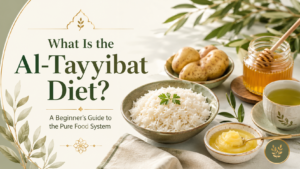
The Al-Tayyibat Diet is a pure food framework focused on simplicity, digestive ease, and removing foods that may create unnecessary digestive burden.
Instead of starting with calorie counting, macro tracking, or strict restriction, the Al-Tayyibat approach begins with one central question:
Is this food pure, simple, and easy for the body to process?
This beginner’s guide explains what the Al-Tayyibat Diet means, how the system separates Tayyibat foods from Khabaith foods, what beginners commonly eat and avoid, and how to start safely.
What Does “Al-Tayyibat” Mean?
The word Tayyibat refers to things that are pure, wholesome, clean, and good.
In the context of food, the Al-Tayyibat system uses this idea to describe foods that are simple, recognizable, and less processed.
The opposite category is often described as Khabaith — foods considered impure, corrupted, overly processed, or burdensome to the body.
In simple terms:
Tayyibat foods = pure, simple, low-friction foods
Khabaith foods = processed, irritating, high-friction foods
The goal is not to make food complicated. The goal is to make food simpler.
The Core Idea Behind the Al-Tayyibat Diet
The Al-Tayyibat Diet is built around the idea of reducing digestive friction.
Digestive friction means the extra burden your body may experience when it has to process complex, highly processed, chemically altered, or irritating foods.
Within the Al-Tayyibat framework, the body is not treated like a calorie calculator. It is treated like a biological system that responds differently to different types of food.
For example, the system views simple foods such as white rice, pure ghee, potatoes, fresh proteins, honey, and simple homemade foods very differently from seed oils, industrial pastries, heavily processed foods, and chemically altered ingredients.
The aim is to create a cleaner food environment so digestion can feel quieter and the body has less to fight against.
Tayyibat vs Khabaith Foods
The most important concept for beginners is the difference between Tayyibat and Khabaith foods.
Tayyibat Foods
Tayyibat foods are usually described as:
- Simple
- Pure
- Easy to recognize
- Minimally processed
- Traditionally prepared
- Easier for many people to digest
Common examples include:
- White rice
- Peeled potatoes
- Pure ghee or butter
- Whole wheat flour for homemade bread
- Fresh red meat or lamb
- Wild-caught fish
- Liver
- Honey
- Seedless jam
- Green tea
These examples match the basic shopping list used in the free Al-Tayyibat Shopping Guide, which focuses on white rice, whole wheat flour, pure ghee or butter, potatoes, strategic proteins, honey, jam, and green tea as beginner staples.
Khabaith Foods
Khabaith foods are usually described as foods that may create more digestive or metabolic burden.
Common examples include:
- Industrial seed oils
- Ultra-processed snacks
- Commercial pastries
- Artificial additives
- Chemical improvers
- Some commercial legumes
- Highly processed “health foods”
The beginner shopping guide specifically flags seed oils, commercial legumes, and industrial pastries as foods to avoid immediately when starting the system.
Is the Al-Tayyibat Diet a Weight Loss Diet?
The Al-Tayyibat Diet is often discussed in relation to weight, inflammation, bloating, digestion, and energy.
But it is not best understood as a typical weight loss diet.
A typical diet usually asks:
How many calories can I eat?
The Al-Tayyibat system asks:
How much friction is this food creating in my body?
This is why the system places less emphasis on calorie counting and more emphasis on food purity, simplicity, digestibility, and removing high-friction foods.
For beginners, this distinction matters. The system is not simply about eating less. It is about changing the quality and simplicity of what you eat.
Why White Rice, Ghee, and Simple Foods Appear Often
One reason the Al-Tayyibat Diet attracts attention is that it includes foods that many modern diets often discourage, especially white rice and ghee.
In the Al-Tayyibat framework, these foods are not viewed through the usual “good carb vs bad carb” or “low fat vs high fat” lens.
Instead, they are viewed through the lens of digestive simplicity and biological compatibility.
White rice is treated as a clean, easy-to-digest source of energy. Pure ghee or butter is treated as a traditional fat that can provide satiety and stability when used appropriately. Peeled potatoes, simple proteins, honey, and homemade foods also fit into this broader “pure food” logic.
This is also why the system is very different from keto, carnivore, calorie counting, or generic clean eating.
How Beginners Can Start the Al-Tayyibat Diet
If you are new to the Al-Tayyibat Diet, the safest way to begin is not to make extreme changes overnight.
Start with education and simple structure.
A beginner-friendly approach could look like this:
Step 1: Learn the Food Categories
Before changing your diet, understand the difference between:
- Tayyibat foods
- Khabaith foods
- Personal trigger foods
- Foods that may require caution depending on your health situation
Step 2: Build a Simple Shopping List
Start with basic foods instead of complicated recipes.
A beginner pantry may include:
- White rice
- Potatoes
- Pure ghee or butter
- Simple homemade bread ingredients
- Fresh proteins
- Honey
- Green tea
- Simple fresh foods
Step 3: Remove the Most Obvious High-Friction Foods
Instead of trying to change everything at once, begin with the most obvious processed foods:
- Seed oils
- Industrial pastries
- Processed snacks
- Foods with long ingredient lists
- Artificial additives
Step 4: Keep Meals Simple
The Al-Tayyibat system favors simplicity. A beginner does not need complicated recipes, expensive supplements, or a long list of superfoods.
The full book expands this into practical implementation, including grocery shopping guidance, daily meal frameworks, travel strategies, common mistakes, and longer reset protocols.
Step 5: Pay Attention to Your Body
Track how you feel after meals.
Useful things to observe include:
- Bloating
- Energy
- Digestion
- Sleep
- Hunger
- Mood
- Skin changes
- Food tolerance
This should be done carefully and without making medical claims or ignoring professional healthcare advice.
New to the Al-Tayyibat Diet?
Download the free Al-Tayyibat Starter Kit to get the beginner food list, shopping guide, and 3-day starter meal framework.
What Is the 7-Day Reset?
Many beginners are interested in the 7-Day Reset because they want a clear starting point.
In the full Al-Tayyibat System book, the 7-Day Emergency Reset appears as one of the practical frameworks, followed by a longer 21-Day Full Healing Protocol and additional meal planning and troubleshooting sections.
A structured beginner reset framework designed to simplify food choices and reduce dietary complexity for a short period.
Is the Al-Tayyibat Diet Safe?
The Al-Tayyibat Diet is a food framework, not a replacement for medical care.
Some people may be curious about the system because they feel tired, bloated, inflamed, or confused by modern diet advice. However, major dietary changes can affect blood sugar, medications, digestion, eating patterns, and underlying health conditions.
You should speak with a qualified healthcare professional before starting, especially if you:
- Have diabetes
- Take medication
- Are pregnant or breastfeeding
- Have kidney disease, liver disease, cardiovascular disease, or autoimmune disease
- Have a history of eating disorders
- Have food allergies or medically restricted diets
This is especially important because the Al-Tayyibat system can involve removing or emphasizing certain food groups, and individual needs vary.
Al-Tayyibat Diet vs Other Diets
The Al-Tayyibat Diet is often confused with other popular diets, but it is different.
Al-Tayyibat vs Keto
Keto focuses on very low carbohydrates and high fat.
The Al-Tayyibat system does not automatically reject carbohydrates. In fact, foods like white rice and potatoes can appear in the system.
Al-Tayyibat vs Carnivore
Carnivore focuses almost entirely on animal foods.
The Al-Tayyibat system includes animal proteins, but it is not simply a meat-only diet.
Al-Tayyibat vs Clean Eating
Clean eating is a broad modern wellness term.
The Al-Tayyibat system is more specific because it uses the Tayyibat vs Khabaith framework and emphasizes digestive friction, simplicity, and food purity.
Download the Free Al-Tayyibat Starter Kit
If you are new to the Al-Tayyibat Diet, start with the free beginner guide.
The Free Al-Tayyibat Starter Kit includes:
- A simple beginner food list
- Common Khabaith foods to avoid
- A shopping guide
- A 3-day starter meal framework
- Common beginner mistakes
- Safety notes before starting
Download the free starter kit here:
Get the Full Al-Tayyibat System Book
The full book goes deeper into the Al-Tayyibat framework and includes the 7-Day Reset, 21-Day Protocol, food lists, shopping guidance, meal frameworks, common mistakes, and practical troubleshooting for beginners.
Learn more here:
Final Thoughts
The Al-Tayyibat Diet is best understood as a pure food system built around simplicity, digestive ease, and removing high-friction modern foods.
For beginners, the most important thing is not perfection. It is clarity.
Start by learning the difference between Tayyibat and Khabaith foods. Build a simple shopping list. Avoid extreme claims. Pay attention to how your body responds. And always seek medical guidance when needed.
Medical Disclaimer
This article is for educational purposes only and does not provide medical advice, diagnosis, or treatment. Always consult a qualified healthcare professional before changing your diet, especially if you have a medical condition, take medication, are pregnant, or have diabetes or another chronic condition.
About the Author
This article was reviewed and published by the Tayyibat Diet Guide Editorial Team.
Learn more about our editorial team here.