
Al-Tayyibat Food List: What to Eat and What to Avoid
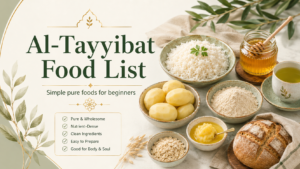
The Al-Tayyibat food list is one of the easiest ways to understand the Al-Tayyibat Diet as a beginner.
Instead of starting with calorie counting, macro tracking, or complicated recipes, the Al-Tayyibat system begins with a simpler question:
Is this food pure, simple, recognizable, and easy to build meals around?
This guide explains common Tayyibat foods, common Khabaith foods, beginner pantry staples, shopping tips, and how to start safely.
What Are Tayyibat Foods?
Tayyibat foods are foods considered pure, simple, wholesome, and less processed.
In the Al-Tayyibat framework, these foods are usually chosen because they are easy to recognize, simple to prepare, and less likely to contain modern industrial ingredients.
Tayyibat foods are not chosen because they are trendy. They are chosen because they are basic.
The goal is to reduce food confusion and build meals from simple foundations.
What Are Khabaith Foods?
Khabaith foods are foods considered corrupted, burdensome, irritating, or highly processed.
These are the foods beginners usually remove first when trying to simplify their diet.
Common Khabaith foods may include industrial seed oils, processed snacks, commercial pastries, artificial additives, and foods with long ingredient lists.
The beginner’s goal is not perfection. The goal is clarity.
Common Tayyibat Foods
Below is a beginner-friendly Al-Tayyibat food list.
1. White Rice
White rice is one of the most common foundation foods in the Al-Tayyibat system.
It is often viewed as a simple, clean source of energy that can be used as a base for meals.
Beginner use:
- Plain cooked white rice
- Rice with ghee or butter
- Rice with simple protein
- Rice as part of a short reset meal
2. Peeled Potatoes
Potatoes are another simple carbohydrate option often used in beginner meals.
In many Al-Tayyibat-style approaches, potatoes are usually peeled and cooked simply.
Beginner use:
- Boiled peeled potatoes
- Potatoes cooked with ghee
- Simple potato-based meals
- Potatoes as an alternative to rice
3. Pure Ghee or Butter
Pure ghee or butter is commonly used as a traditional fat source.
The Al-Tayyibat system often favors simple traditional fats over industrial seed oils.
Beginner use:
- Ghee with rice
- Ghee with potatoes
- Butter in simple homemade meals
- Small amounts used for satiety and flavor
4. Whole Wheat Flour for Homemade Bread
Whole wheat flour may appear in the system when used for homemade bread or simple baked foods.
The focus is usually on avoiding industrial pastries and commercial baked goods that contain seed oils, preservatives, chemical improvers, and additives.
Beginner use:
- Homemade bread
- Simple homemade pastries
- Minimal ingredients
- No industrial seed oils
5. Fresh Red Meat or Lamb
Fresh red meat, especially beef or lamb, is commonly discussed as a strategic protein source.
The emphasis is usually on freshness, simplicity, and avoiding heavily processed meat products.
Beginner use:
- Freshly cooked beef
- Fresh lamb
- Simple meat with rice or potatoes
- Avoiding processed deli meats
6. Wild-Caught Fish
Fish may be used as a simple protein source, especially when it is fresh and simply prepared.
Beginner use:
- Fresh fish
- Grilled or baked fish
- Fish with rice
- Avoiding heavily breaded or fried commercial fish products
7. Liver
Liver is often treated as a nutrient-dense food in the Al-Tayyibat system.
Because liver is rich and strong, beginners should approach it carefully and use it according to personal tolerance and professional medical advice when needed.
Beginner use:
- Fresh calf or lamb liver
- Small portions
- Cooked simply
- Not used as a daily extreme food challenge
8. Honey
Honey is commonly listed as a simple sweet energy source.
The Al-Tayyibat approach does not always follow the same logic as low-carb diets. Instead, it often looks at whether a food is pure, simple, and recognizable.
Beginner use:
- Small amounts of pure honey
- Honey with tea
- Honey as a simple sweetener
- Avoiding artificial sweeteners and processed candy
9. Seedless Jam
Seedless jam may appear as a simple sweet food when it is made from fruit and sugar without unnecessary additives.
Beginner use:
- Simple seedless jam
- Small amounts
- With homemade bread
- Avoiding commercial products with long ingredient lists
10. Green Tea
Green tea is often used as a simple drink option.
Beginner use:
- Plain green tea
- No artificial flavors
- No sweetened bottled versions
- Simple hot tea
Common Khabaith Foods to Avoid
Beginners usually start by removing the most obvious high-friction foods first.
1. Industrial Seed Oils
Industrial seed oils are one of the biggest “avoid first” categories in the Al-Tayyibat system.
Common examples include:
- Corn oil
- Sunflower oil
- Soybean oil
- Canola oil
- Mixed vegetable oils
These oils are often found in processed snacks, restaurant foods, fried foods, pastries, sauces, and packaged products.
2. Industrial Pastries
Commercial pastries are usually avoided because they often contain seed oils, preservatives, refined ingredients, chemical improvers, and long ingredient lists.
Examples include:
- Packaged cakes
- Commercial croissants
- Store-bought donuts
- Industrial biscuits
- Sweet bakery products made with vegetable oils
3. Ultra-Processed Snacks
Ultra-processed snacks are usually high in additives, flavor enhancers, seed oils, refined starches, and artificial ingredients.
Examples include:
- Chips
- Packaged crackers
- Processed snack bars
- Flavored instant noodles
- Packaged “diet” snacks
- Artificially flavored foods
4. Artificial Additives
Beginners should learn to read labels.
If a product has a long ingredient list full of unfamiliar additives, it may not fit the beginner Al-Tayyibat approach.
Watch for:
- Artificial flavors
- Artificial colors
- Emulsifiers
- Chemical improvers
- Preservatives
- Stabilizers
- Industrial sweeteners
5. Commercial Legumes
Some Al-Tayyibat materials discourage commercial legumes such as beans, lentils, and chickpeas because of concerns around digestive burden for some people.
This is one of the areas where beginners should be careful and avoid extreme claims.
Some people tolerate legumes well. Others may notice bloating or digestive discomfort.
If you have a medical condition or a restricted diet, speak with a qualified professional before removing major food groups.
6. Foods With Long Ingredient Lists
A simple beginner rule:
The longer the ingredient list, the more cautious you should be.
This does not mean every packaged food is automatically dangerous, but it does mean beginners should prioritize simple foods they can recognize.
Beginner Al-Tayyibat Shopping List
Here is a simple beginner shopping list.
Carbohydrate Foundations
- White rice
- Peeled potatoes
- Whole wheat flour for homemade bread
Traditional Fats
- Pure ghee
- Butter
Proteins
- Fresh beef
- Fresh lamb
- Wild-caught fish
- Liver, if appropriate for you
Simple Sweet Foods
- Pure honey
- Seedless jam
Drinks
- Water
- Plain green tea
Foods to Remove First
- Seed oils
- Industrial pastries
- Ultra-processed snacks
- Processed sauces
- Foods with long ingredient lists
- Artificially flavored drinks
How to Build a Simple Al-Tayyibat Meal
Beginners do not need complicated recipes.
A simple meal framework may look like this:
Base: white rice or peeled potatoes
Fat: ghee or butter
Protein: fresh meat, fish, or another tolerated protein
Drink: water or plain green tea
Example meals:
- White rice with ghee and fresh beef
- Peeled potatoes with butter and fish
- Homemade bread with butter and honey
- Rice with lamb and green tea
- Simple potato meal with a tolerated protein
The point is simplicity.
3 Beginner Rules
Rule 1: Start With Staples
Do not start by trying to recreate every recipe.
Start with the basic foods you can use repeatedly.
Rule 2: Remove the Obvious Processed Foods First
The easiest first step is not to debate every food.
Start by removing:
- Seed oils
- Packaged pastries
- Ultra-processed snacks
- Artificial additives
Rule 3: Keep Meals Predictable
A predictable meal plan helps reduce confusion.
In the beginning, boring can be useful.
The goal is not culinary excitement. The goal is clarity.
Common Beginner Mistakes
Mistake 1: Trying to Change Everything Overnight
Extreme changes can create confusion and stress.
Start with the basics.
Mistake 2: Eating “Mostly Pure” but Keeping Seed Oils
Seed oils often hide in sauces, snacks, restaurant meals, and baked foods.
Read labels carefully.
Mistake 3: Making the Diet Too Complicated
The Al-Tayyibat system is built around simplicity.
If your meal plan needs 25 ingredients and 3 hours of preparation, you are probably overcomplicating it.
Mistake 4: Ignoring Medical Conditions
Diet changes can affect blood sugar, digestion, medication needs, and overall health.
If you have a medical condition, get professional guidance.
Mistake 5: Expecting Instant Results
Some people feel changes quickly. Others need more time. Some may not feel better at all.
Individual results vary.
Is This Food List for Everyone?
No food list is perfect for everyone.
The Al-Tayyibat food list is an educational starting point, not a personalized medical prescription.
You should be especially careful if you:
- Have diabetes
- Take medication
- Are pregnant or breastfeeding
- Have kidney disease
- Have liver disease
- Have cardiovascular disease
- Have autoimmune disease
- Have an eating disorder history
- Have food allergies
- Have medically restricted nutrition needs
Always speak with a qualified healthcare professional before making major changes.
Download the Free Al-Tayyibat Starter Kit
If you want a simpler version of this food list, download the free beginner guide.
The Free Al-Tayyibat Starter Kit includes:
- A beginner’s food list
- Common Khabaith foods to avoid
- A simple shopping guide
- A 3-day starter meal framework
- Common mistakes to avoid
- Safety notes before starting
Download it here:
Get the Full Al-Tayyibat System Book
The full book goes deeper into the Al-Tayyibat framework and includes the 7-Day Reset, 21-Day Protocol, shopping guidance, meal frameworks, common mistakes, and practical troubleshooting for beginners.
Learn more here:
Final Thoughts
The Al-Tayyibat food list is not about chasing complicated diet rules.
It is about returning to simple foods, reducing processed ingredients, and building meals from pure, recognizable staples.
For beginners, the best first step is simple:
Start with the core foods. Remove the obvious processed foods. Keep meals predictable. Read labels. Pay attention to your body. And seek medical guidance when needed.
Medical Disclaimer
This article is for educational purposes only and does not provide medical advice, diagnosis, or treatment. Always consult a qualified healthcare professional before changing your diet, especially if you have a medical condition, take medication, are pregnant, or have diabetes or another chronic condition.
About the Author
This article was reviewed and published by the Tayyibat Diet Guide Editorial Team.
Learn more about our editorial team here.