
Al-Tayyibat Diet Meal Plan: Simple Daily Meal Frameworks for Beginners
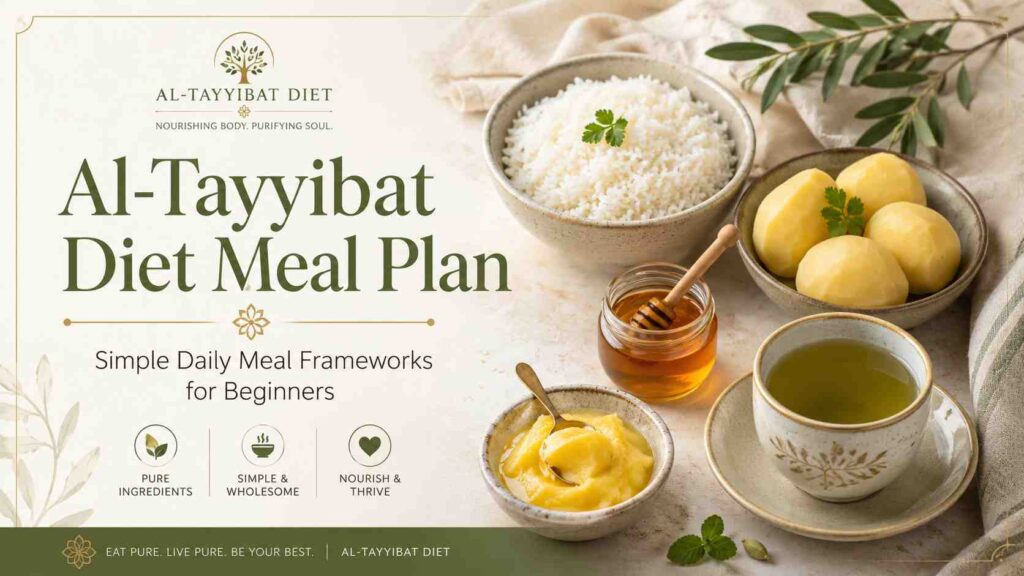
If you are looking for an Al-Tayyibat Diet meal plan, the first thing to understand is this:
The Al-Tayyibat approach is not about complicated recipes.
It is about building simple meals from pure, recognizable foods and reducing the most obvious processed foods first.
This beginner’s guide gives you simple daily meal frameworks, food list ideas, shopping tips, avoid-first foods, and safety notes so you can start with clarity.
What Is an Al-Tayyibat Diet Meal Plan?
An Al-Tayyibat Diet meal plan is a simple way to organize meals around Tayyibat foods.
In this framework, Tayyibat foods are usually:
- Simple
- Pure
- Recognizable
- Traditionally prepared
- Easier to build meals around
- Lower in unnecessary additives
The opposite category is often described as Khabaith foods.
Khabaith foods are often:
- Highly processed
- Industrially altered
- Full of additives
- Difficult to recognize as basic ingredients
- Built from refined or artificial components
- Harder to track or understand
The goal of a beginner meal plan is not perfection.
The goal is clarity.
The Simple Meal Formula
The easiest way to build an Al-Tayyibat meal is to use this formula:
Base + Fat + Protein + Simple Drink
This keeps meals simple and repeatable.
Examples:
- White rice + ghee + fresh beef + water
- Peeled potatoes + butter + fish + green tea
- Homemade bread + butter + honey + warm tea
- Rice + lamb + water
- Potatoes + fresh protein + simple drink
You do not need complicated recipes to start.
You need a few clear meal structures.
Beginner Al-Tayyibat Food List
Here are common foods beginners may use in a simple Al-Tayyibat meal plan.
Simple Bases
- White rice
- Peeled potatoes
- Homemade bread from simple ingredients, if appropriate for you
Traditional Fats
- Pure ghee
- Butter
Fresh Proteins
- Fresh beef
- Fresh lamb
- Fresh fish
- Liver, if appropriate for you
Simple Sweet Foods
- Pure honey
- Seedless jam
- Simple fruit preserves without unnecessary additives
Simple Drinks
- Water
- Plain green tea
- Simple warm drinks without artificial flavors
This is not a rule that every person must eat every food.
It is a beginner’s list to help you understand the structure.
Foods to Avoid First
A beginner Al-Tayyibat meal plan usually starts by avoiding the most obvious Khabaith foods.
Start with:
- Industrial seed oils
- Commercial pastries
- Ultra-processed snacks
- Artificially flavored drinks
- Foods fried in vegetable oils
- Packaged foods with long ingredient lists
- “Healthy” snacks full of additives
- Butter-like spreads made with vegetable oils
- Processed meats with fillers or additives
Common seed oils to watch for include:
- Corn oil
- Sunflower oil
- Soybean oil
- Canola oil
- Mixed vegetable oils
- Generic vegetable oil
The first step is not to become afraid of food.
The first step is to remove the clearest processed foods and simplify your meals.
Daily Meal Framework #1: Rice-Based Day
This is a simple beginner day built around white rice.
Breakfast
Homemade bread with butter and a small amount of honey
Plain green tea or water
Lunch
White rice with ghee and fresh beef or lamb
Water
Dinner
White rice with fresh fish
Simple warm drink or water
Why This Works for Beginners
This framework is easy to repeat.
Rice gives a simple base. Ghee or butter adds fat. Fresh protein keeps the meal grounded. The drinks stay simple.
Daily Meal Framework #2: Potato-Based Day
This day uses peeled potatoes as the main base.
Breakfast
Peeled potatoes with butter
Plain green tea or water
Lunch
Peeled potatoes with fresh fish
Water
Dinner
Peeled potatoes with ghee and fresh beef or lamb
Simple warm drink
Why This Works for Beginners
Potatoes are simple, recognizable, and easy to prepare.
They can be boiled, mashed, or served plain with butter or ghee.
Daily Meal Framework #3: Bread-Based Day
This day uses homemade bread or simple bread made from basic ingredients.
Breakfast
Homemade bread with butter and honey
Plain green tea
Lunch
Homemade bread with fresh protein
Water
Dinner
White rice or potatoes with ghee and fish
Simple warm drink
Important Note
Commercial bread often contains seed oils, preservatives, dough conditioners, sweeteners, and long ingredient lists.
If bread is part of your plan, the simplest option is usually homemade or carefully selected bread with basic ingredients.
Daily Meal Framework #4: Simple Protein Day
This day focuses on fresh protein with simple sides.
Breakfast
White rice with ghee
Plain green tea
Lunch
Fresh beef or lamb with rice
Water
Dinner
Fresh fish with potatoes and butter
Simple warm drink
Why This Works for Beginners
Fresh protein can make meals feel more complete.
The key is to choose simple protein without marinades, breading, seed oils, or processed sauces.
3-Day Beginner Meal Plan
Here is a simple 3-day meal plan example.
This is not medical nutrition advice. It is an educational framework.
Day 1
Breakfast
Homemade bread
Butter
Small amount of honey
Plain green tea
Lunch
White rice
Ghee
Fresh beef or lamb
Water
Dinner
Peeled potatoes
Butter
Simple warm drink
Day 2
Breakfast
White rice
Small amount of ghee
Plain green tea
Lunch
Fresh fish
White rice
Water
Dinner
Homemade bread
Butter
Small amount of seedless jam, if tolerated
Day 3
Breakfast
Homemade bread
Butter
Honey
Water or plain green tea
Lunch
White rice
Ghee
Fresh protein
Water
Dinner
Peeled potatoes
Butter
Simple warm drink
The purpose of these 3 days is not to be perfect.
The purpose is to practice building simple meals.
7-Day Beginner Framework
If you want to extend the plan to 7 days, keep the same structure and rotate simple meals.
Day 1
Rice + ghee + fresh beef
Day 2
Potatoes + butter + fish
Day 3
Homemade bread + butter + honey
Day 4
Rice + lamb + water
Day 5
Potatoes + ghee + fresh protein
Day 6
Rice + fish + green tea
Day 7
Repeat the meals that felt easiest and most comfortable
A good beginner plan does not need endless variety.
It needs simple, repeatable meals that help you understand the system.
Simple Shopping List for the Meal Plan
Use this list for your first grocery trip.
Staples
- White rice
- Peeled potatoes
- Whole wheat flour or simple bread ingredients
Fats
- Pure ghee
- Butter
Proteins
- Fresh beef
- Fresh lamb
- Fresh fish
Sweet Foods
- Pure honey
- Seedless jam, if appropriate
Drinks
- Water
- Plain green tea
Optional Extras
- Fresh herbs
- Lemon
- Simple spices without additives
Keep the first shopping list short.
A short list is easier to follow than a complicated one.
How to Prep Without Overcomplicating
Meal prep does not need to be complicated.
You can prepare:
- A batch of white rice
- Boiled peeled potatoes
- A simple fresh protein
- Homemade bread, if used
- A simple drink routine
However, freshness matters.
If you are sensitive to leftovers or have digestive concerns, pay attention to how long food is stored and how your body responds.
Beginner Meal Prep Tips
Use these simple tips:
- Cook smaller portions at first
- Store food safely
- Cool leftovers quickly
- Avoid leaving cooked food at room temperature
- Reheat properly
- Freeze portions if needed
- Track how you feel after fresh foods vs leftovers
Meal prep should make the plan easier, not riskier.
What to Track During the Meal Plan
A food journal can help beginners learn.
Track:
- Meal time
- Foods eaten
- Energy after meals
- Bloating
- Digestion
- Hunger
- Fullness
- Mood
- Sleep
- Food tolerance
Use this simple format:
Meal:
Foods:
Energy:
Digestion:
Bloating level:
Notes:
This makes your meal plan more useful than just following a list.
Common Beginner Mistakes
Mistake 1: Making the Plan Too Complicated
Do not start with complicated recipes.
Start with simple meals.
Mistake 2: Buying Too Many Foods
You do not need a huge grocery list.
Start with a few staples you can repeat.
Mistake 3: Eating Too Little
The Al-Tayyibat approach is not a starvation diet.
Do not under-eat or skip meals aggressively.
Mistake 4: Ignoring Labels
Seed oils and additives often hide in foods that look simple.
Read ingredient lists.
Mistake 5: Becoming Afraid of Food
The goal is clarity, not fear.
The framework should help you make simpler choices, not make you anxious about every bite.
Who Should Be Careful?
Speak with a qualified healthcare professional before changing your diet if you:
- Have diabetes
- Have blood sugar issues
- Take prescription medication
- Are pregnant or breastfeeding
- Have kidney disease
- Have liver disease
- Have cardiovascular disease
- Have autoimmune disease
- Have a history of eating disorders
- Have food allergies
- Follow a medically restricted diet
- Are underweight or recovering from illness
This is especially important if your meal plan changes carbohydrates, meal timing, medication needs, or major food groups.
Is This Meal Plan Low Carb?
No.
The Al-Tayyibat Diet is not the same as a low-carb diet.
It may include foods such as rice, potatoes, honey, and homemade bread depending on the person and context.
The goal is not carb restriction.
The goal is food purity, simplicity, and reduced reliance on processed foods.
Is This Meal Plan Keto?
No.
Keto focuses on very low carbohydrate intake.
The Al-Tayyibat meal plan focuses on simple, pure, recognizable foods.
A food can be high in carbohydrates and still be considered simple in this framework.
A packaged keto product can be low-carb but still not fit the Al-Tayyibat approach if it contains additives, seed oils, or long ingredient lists.
Is This Meal Plan Carnivore?
No.
Carnivore focuses mostly or entirely on animal foods.
The Al-Tayyibat framework may include animal foods, but it may also include rice, potatoes, honey, green tea, and homemade bread.
The Al-Tayyibat question is not:
Is this animal-based?
The question is:
Is this pure, simple, recognizable, and low in industrial processing?
How to Make the Meal Plan Easier
Use these practical tips:
- Repeat meals
- Keep the grocery list short
- Cook simple foods
- Avoid complicated recipes
- Keep snacks minimal
- Read labels
- Drink simple drinks
- Track your response
- Adjust based on tolerance
- Seek professional guidance when needed
The easier your plan is, the more likely you are to understand it.
Download the Free Al-Tayyibat Starter Kit
If you want a printable beginner resource, download the free Al-Tayyibat Starter Kit.
It includes:
- Beginner food list
- Tayyibat vs Khabaith quick guide
- First grocery run checklist
- 3-day starter meal framework
- Common beginner mistakes
- Safety notes before starting
Download it here:
Get the Full Al-Tayyibat System Book
The full book goes deeper into the complete Al-Tayyibat framework and includes the 7-Day Reset, 21-Day Protocol, full food lists, shopping guidance, meal frameworks, common mistakes, and troubleshooting for beginners.
Learn more here:
Related Guides
Read these next:
Al-Tayyibat 3-Day Starter Plan
Al-Tayyibat Grocery Shopping Guide
Final Thoughts
A good Al-Tayyibat Diet meal plan should be simple.
Start with a clear base. Add a traditional fat. Add a fresh protein. Choose a simple drink. Avoid the most obvious processed foods. Track how you feel.
The goal is not perfection.
The goal is to make food simpler, clearer, and easier to understand.
Medical Disclaimer
This article is for educational purposes only and does not provide medical advice, diagnosis, or treatment. Always consult a qualified healthcare professional before changing your diet, especially if you have a medical condition, take medication, are pregnant or breastfeeding, have diabetes, or have another chronic condition.
About the Author
This article was reviewed and published by the Tayyibat Diet Guide Editorial Team.
Learn more about our editorial team here.