
Al-Tayyibat Diet and Histamine: Fresh Foods, Leftovers & Beginner Tips
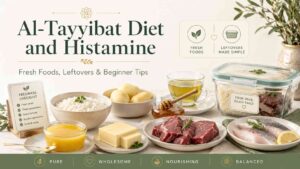
If you are researching the Al-Tayyibat Diet and histamine, the most important idea is freshness.
Histamine issues can be complicated. They may involve food freshness, storage, leftovers, fermentation, gut health, allergies, medications, enzymes such as DAO, and individual tolerance.
The Al-Tayyibat framework is not a medical treatment for histamine intolerance. But because it focuses on simple, recognizable foods and avoiding highly processed foods, some beginners may find it useful as a way to think more carefully about food quality, freshness, and ingredient lists.
This guide explains how beginners can think about the Al-Tayyibat Diet and histamine, including fresh foods, leftovers, processed foods, simple meals, safety notes, and when to seek medical advice.
Important Medical Note
Histamine intolerance is not the same as a food allergy, even though some symptoms may feel similar. Cleveland Clinic describes histamine intolerance as different from an allergy, and notes that diagnosis and management can require healthcare guidance.
This article is educational only. It does not diagnose, treat, or cure histamine intolerance, mast cell disorders, allergies, digestive disease, or any medical condition.
Speak with a qualified healthcare professional if you have symptoms that are severe, persistent, worsening, or linked with hives, swelling, breathing problems, faintness, vomiting, chest tightness, blood in stool, unexplained weight loss, or severe abdominal pain.
What Is Histamine?
Histamine is a chemical involved in immune responses, digestion, and other body processes.
Many people think of histamine only in connection with allergies, but histamine can also be present in foods.
Some people may react to histamine-rich foods or have difficulty breaking histamine down. The enzyme diamine oxidase, often called DAO, is commonly discussed in relation to dietary histamine breakdown.
However, histamine reactions are complex and individual. Not every symptom after eating is caused by histamine.
What Is Histamine Intolerance?
Histamine intolerance is often described as a situation where histamine builds up beyond what the body can comfortably process. A 2024 review describes histamine intolerance as involving histamine accumulation that exceeds the body’s capacity to eliminate it.
Possible symptoms discussed in medical and allergy resources may include digestive symptoms, headache, flushing, skin symptoms, congestion, or allergy-like symptoms.
But symptoms can overlap with many other conditions. That is why self-diagnosis can be risky.
Why Freshness Matters
One reason histamine is discussed in relation to food is that histamine content can increase during aging, maturing, fermentation, and storage. The American Academy of Allergy, Asthma & Immunology notes that food histamine content can increase with maturing and fermentation processes.
This is why people exploring histamine issues often pay attention to:
- Fresh foods
- How food is stored
- How long leftovers sit
- Fermented foods
- Aged foods
- Processed meats
- Canned or preserved foods
- Restaurant foods
The Al-Tayyibat framework already encourages beginners to think about simplicity, freshness, and avoiding long ingredient lists. That can overlap with histamine-awareness, but it is not the same as a medical low-histamine diet.
How the Al-Tayyibat Diet Connects to Histamine Awareness
The Al-Tayyibat Diet is based on the difference between Tayyibat foods and Khabaith foods.
In simple terms:
Tayyibat foods are pure, simple, recognizable, and easier to build meals around.
Khabaith foods are highly processed, industrially altered, full of additives, or harder to recognize as basic ingredients.
When thinking about histamine, beginners may use the Al-Tayyibat approach to ask:
- Is this food fresh?
- Is it simple?
- Is it recognizable?
- Has it been stored for a long time?
- Is it fermented, aged, cured, or heavily processed?
- Does it contain long ingredient lists?
- How does my body respond?
This is a practical awareness framework, not a diagnosis.
Fresh Foods vs Leftovers
For people concerned about histamine, leftovers can be an important topic.
Histamine may increase in some foods as they sit, especially protein foods if storage is poor or time is extended.
A beginner-friendly approach is:
- Cook smaller portions
- Eat freshly prepared meals when possible
- Cool leftovers quickly
- Store food safely
- Avoid leaving cooked food at room temperature for long
- Freeze portions quickly if you need to store them
- Reheat safely
- Track your personal response
Do not use unsafe food practices in the name of any diet.
Food safety still matters.
Food Beginners Often Watch More Carefully
If someone is exploring histamine sensitivity with professional guidance, they may be asked to pay attention to foods such as:
- Fermented foods
- Aged cheese
- Cured meats
- Processed meats
- Smoked fish
- Canned fish
- Vinegar-based foods
- Alcohol
- Long-stored leftovers
- Highly processed packaged foods
This does not mean everyone must avoid these foods.
It means they are commonly discussed in histamine-aware eating patterns and may be worth tracking if symptoms are present.
Al-Tayyibat Foods and Histamine: A Beginner’s View
Common Al-Tayyibat beginner foods may include:
- White rice
- Peeled potatoes
- Pure ghee
- Butter
- Fresh beef
- Fresh lamb
- Fresh fish
- Honey, if appropriate for you
- Plain green tea
- Water
- Simple homemade meals
From a histamine-awareness perspective, freshness and personal tolerance matter.
For example, fresh meat and fish are different from aged, cured, smoked, canned, or long-stored versions.
A simple food can still trigger symptoms for some people, so tracking matters.
Fresh Meat and Fish
Fresh meat and fish can fit the Al-Tayyibat framework because they are simple and recognizable.
However, people concerned about histamine often pay close attention to how fresh these foods are and how they are stored.
Beginner tips:
- Buy fresh when possible
- Cook soon after buying
- Avoid long storage
- Freeze portions quickly if needed
- Avoid cured or aged processed meats
- Avoid fish that has been stored too long
- Track how you respond
This is especially important for fish, which can develop high histamine levels if improperly stored.
Rice and Potatoes
White rice and peeled potatoes are simple carbohydrate foundations in many Al-Tayyibat beginner meals.
From a histamine perspective, they are often simpler than many processed foods because they are basic staples.
However, personal tolerance still matters.
Some people may tolerate rice well. Others may feel better with potatoes. Some may have blood sugar concerns and need professional guidance.
The Al-Tayyibat approach is not one-size-fits-all.
Ghee and Butter
Pure ghee and butter may be used in the Al-Tayyibat framework.
When shopping, look for:
- Short ingredient lists
- No seed oils added
- No artificial flavors
- No “spread” blends with vegetable oils
- No unnecessary additives
People with dairy sensitivity should be careful and track their response.
Honey and Green Tea
Honey and green tea may appear in beginner Al-Tayyibat materials.
But they are not automatically appropriate for everyone.
Honey can affect blood sugar, so people with diabetes, insulin resistance, or blood sugar concerns should seek professional advice.
Green tea may not suit everyone, especially people sensitive to caffeine or tannins.
Again, the key is personal tolerance.
Foods to Avoid First
In the Al-Tayyibat framework, beginners often start by reducing obvious Khabaith foods.
These include:
- Industrial seed oils
- Commercial pastries
- Ultra-processed snacks
- Artificially flavored drinks
- Packaged foods with long ingredient lists
- Processed sauces
- Fried foods made with vegetable oils
- Processed meats with additives
This can make the food environment simpler and may make symptom tracking easier.
Why Ingredient Lists Matter
Packaged foods can contain:
- Preservatives
- Artificial flavors
- Artificial colors
- Emulsifiers
- Stabilizers
- Sweeteners
- Seed oils
- “Natural flavors”
- Long lists of unfamiliar ingredients
For someone trying to understand food reactions, a long ingredient list makes tracking harder.
A simple meal with a few ingredients is easier to evaluate.
A Simple Histamine-Aware Meal Formula
For beginners, use this formula:
Fresh Base + Fresh Protein + Simple Fat + Simple Drink
Examples:
- Freshly cooked white rice + freshly cooked beef + ghee + water
- Peeled potatoes + fresh fish + butter + water
- Rice + fresh lamb + ghee + plain green tea, if tolerated
The key word is fresh.
Do not assume every leftover will feel the same as a fresh meal.
Food Journal for Histamine Awareness
A food journal can help you avoid guessing.
Track:
- Food eaten
- Time cooked
- Time eaten
- Was it fresh or leftover?
- Storage method
- Symptoms 30–60 minutes later
- Symptoms 2–4 hours later
- Skin changes
- Headache
- Digestion
- Energy
- Congestion
- Sleep
- Stress level
Use a simple format:
Meal:
Fresh or leftover:
Storage:
Symptoms:
Bloating level:
Skin or sinus symptoms:
Notes:
Bring your notes to a qualified professional if symptoms persist.
What Not to Do
Do Not Self-Diagnose
Histamine intolerance overlaps with many other conditions. Do not assume every reaction is histamine.
Do Not Remove Too Many Foods Alone
Low-histamine diets can become restrictive. They are best approached carefully and ideally with professional support.
Do Not Ignore Allergic Symptoms
Food allergy is different from intolerance. NHS guidance notes that food intolerance is different from food allergy, and recurring symptoms should be discussed with a GP.
If you experience swelling, wheezing, throat tightness, breathing difficulty, or a severe reaction, seek urgent medical care.
Do Not Trust Random Food Lists Completely
Histamine food lists can differ. Food histamine levels vary based on freshness, storage, processing, and preparation.
Use lists as starting points, not absolute truth.
Do Not Treat the Al-Tayyibat Diet as a Cure
The Al-Tayyibat system can help structure food choices, but it does not cure histamine intolerance or mast cell disorders.
Beginner Tips for Freshness
Use these general practices:
- Buy smaller amounts of fresh protein
- Cook fresh meals when possible
- Freeze extra portions quickly
- Avoid keeping protein leftovers for too long
- Avoid room-temperature storage
- Use simple meals with fewer ingredients
- Keep a symptom journal
- Read ingredient labels
- Avoid highly processed foods
- Seek guidance for persistent symptoms
Should You Try a Low-Histamine Diet?
A low-histamine diet is a specific dietary approach and can be restrictive.
Do not start a strict low-histamine diet without understanding the risks.
Cleveland Clinic notes that histamine intolerance may require a team of healthcare providers to diagnose and manage, and that underlying conditions can be involved.
If symptoms are significant, work with a clinician or registered dietitian who understands histamine intolerance, allergies, mast cell conditions, and digestive issues.
Download the Free Al-Tayyibat Starter Kit
If you want a simple printable beginner resource, download the free Al-Tayyibat Starter Kit.
It includes:
- Beginner food list
- Tayyibat vs Khabaith quick guide
- First grocery run checklist
- 3-day starter meal framework
- Common beginner mistakes
- Safety notes before starting
Download it here:
Get the Full Al-Tayyibat System Book
The full book goes deeper into the complete Al-Tayyibat framework and includes the 7-Day Reset, 21-Day Protocol, food lists, shopping guidance, meal frameworks, common mistakes, and troubleshooting for beginners.
Learn more here:
Related Guides
Read these next:
Al-Tayyibat Grocery Shopping Guide
Final Thoughts
The Al-Tayyibat Diet and histamine awareness can overlap around one important idea:
Fresh, simple, recognizable foods are easier to understand than processed foods with long ingredient lists.
But histamine intolerance is complex. It is not something to self-diagnose casually, and it should not be treated with extreme restriction without support.
Start with fresh meals, simple ingredients, careful storage, and a symptom journal. Avoid obvious processed foods. Track your response. And seek professional guidance if symptoms are persistent, severe, or confusing.
Medical Disclaimer
This article is for educational purposes only and does not provide medical advice, diagnosis, or treatment. Always consult a qualified healthcare professional before changing your diet, especially if you have allergy-like symptoms, digestive symptoms, a medical condition, take medication, are pregnant or breastfeeding, have diabetes, or have another chronic condition.
About the Author
This article was reviewed and published by the Tayyibat Diet Guide Editorial Team.
Learn more about our editorial team here.