
Al-Tayyibat vs Keto and Carnivore: A Beginner Comparison
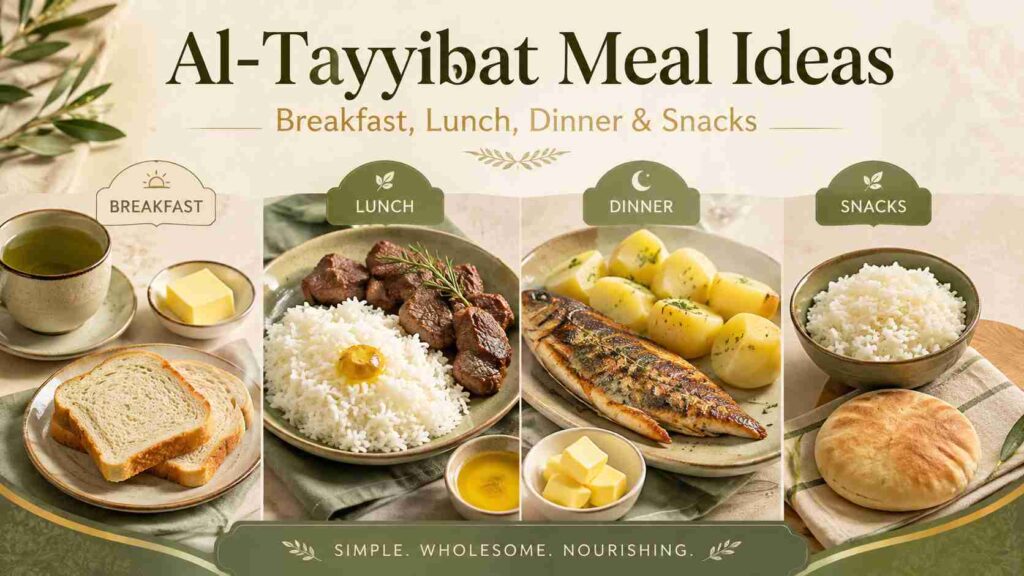
The Al-Tayyibat Diet, the ketogenic diet, and the carnivore diet may all reduce reliance on certain processed foods, but they are not the same approach.
Each one uses a different method for deciding what belongs on the plate.
- The Al-Tayyibat framework focuses primarily on food quality, simplicity, recognizable ingredients, and the distinction between Tayyibat and Khabaith foods.
- The keto diet focuses mainly on keeping carbohydrate intake very low so the body relies more heavily on fat and ketones for energy.
- The carnivore diet removes most or all plant foods and centers meals around animal-based foods.
This guide compares their food choices, restrictions, meal structure, goals, practical challenges, and safety considerations.
It is an educational comparison, not a recommendation to follow any particular diet.
Quick Comparison Table
| Feature | Al-Tayyibat Diet | Keto Diet | Carnivore Diet |
|---|---|---|---|
| Main focus | Food quality and simplicity | Very low carbohydrate intake | Animal-based foods |
| Carbohydrates | May include rice, potatoes, bread, and honey | Usually severely restricted | Usually nearly eliminated |
| Plant foods | May be included depending on the framework and tolerance | Low-carbohydrate plant foods may be included | Usually excluded |
| Animal foods | Fresh beef, lamb, fish, butter, and ghee may be included | Meat, fish, eggs, and high-fat dairy are common | Meat and other animal foods form the foundation |
| Main restriction | Processed and Khabaith foods | High-carbohydrate foods | Nearly all plant foods |
| Meal structure | Simple base, fat, optional protein, and drink | Protein, fat, and low-carb vegetables | Meat, fat, and animal-based foods |
| Primary organizing principle | Purity and recognizability | Macronutrient targets | Food-source restriction |
| Tracking required | Usually ingredient-focused | Often requires carbohydrate tracking | Usually fewer foods but major restriction |
| Main concern | Individual interpretation and nutritional balance | Restriction, medication effects, and sustainability | Nutrient adequacy, digestion, and long-term evidence |
What Is the Al-Tayyibat Diet?
The Al-Tayyibat Diet is a food-quality framework built around choosing foods considered simple, pure, recognizable, and appropriate within the Tayyibat philosophy.
The framework commonly emphasizes foods such as:
- White rice
- Peeled potatoes
- Simple homemade bread
- Butter
- Pure ghee
- Fresh beef
- Fresh lamb
- Fresh fish
- Water
- Plain green tea
- Honey, when appropriate
It generally discourages heavy dependence on:
- Seed oils
- Margarine and shortening
- Commercial pastries
- Artificially flavored drinks
- Packaged snacks
- Highly processed sauces
- Long ingredient lists
- Foods categorized as Khabaith within the system
The Al-Tayyibat Diet is not automatically low carbohydrate.
A meal may include rice, potatoes, bread, or honey, depending on individual needs and tolerance.
What Is the Keto Diet?
The ketogenic diet is organized around carbohydrate restriction.
Its purpose is usually to reduce carbohydrate intake enough that the body begins producing more ketones and relying more heavily on fat for energy.
A typical keto meal may include:
- Meat
- Fish
- Eggs
- Cheese
- Butter
- Olive oil
- Avocado
- Low-carbohydrate vegetables
- Nuts and seeds
Foods commonly restricted include:
- Rice
- Potatoes
- Bread
- Pasta
- Most grains
- Sugar
- Honey
- Many fruits
- High-carbohydrate vegetables
The exact carbohydrate limit varies between individuals and versions of the diet.
Some people track:
- Total carbohydrates
- Net carbohydrates
- Protein intake
- Fat intake
- Ketone levels
This tracking is not usually a central feature of the Al-Tayyibat framework.
What Is the Carnivore Diet?
The carnivore diet is a highly restrictive animal-based approach.
Its strictest form includes foods such as:
- Beef
- Lamb
- Fish
- Poultry
- Eggs
- Animal fats
- Salt
- Water
Some versions also include:
- Butter
- Ghee
- Cheese
- Cream
- Other dairy products
The diet usually excludes:
- Rice
- Potatoes
- Bread
- Fruit
- Vegetables
- Legumes
- Herbs
- Tea
- Honey
- Most plant-based seasonings
Unlike keto, which may include low-carbohydrate vegetables, nuts, seeds, and plant fats, strict carnivore eating removes nearly all plant foods.
The Main Difference: Food Quality vs Macronutrients vs Food Source
The clearest way to understand the three approaches is to identify the main question each one asks.
The Al-Tayyibat Diet Asks:
Is this food pure, simple, recognizable, and suitable within the Tayyibat framework?
The Keto Diet Asks:
Does this food keep carbohydrate intake low enough to support ketosis?
The Carnivore Diet Asks:
Is this food derived from an animal?
These questions can produce very different meals.
For example, plain white rice may be accepted within the Al-Tayyibat framework but usually excluded from keto and carnivore eating.
Cheese may fit many keto and carnivore plans, but a highly processed cheese product with additives may not fit a strict food-quality interpretation of Al-Tayyibat.
Al-Tayyibat vs Keto: Key Differences
1. Carbohydrate Intake
The Al-Tayyibat Diet may include carbohydrate-rich foods such as:
- Rice
- Potatoes
- Simple bread
- Honey
Keto generally restricts these foods because they can raise total carbohydrate intake quickly.
This is one of the biggest differences between the two approaches.
Al-Tayyibat does not define food quality only through carbohydrate content.
Keto does not define suitability only through ingredient simplicity. A food may be minimally processed but still too high in carbohydrates for a ketogenic plan.
2. The Role of Ketosis
Ketosis is central to a ketogenic diet.
It is not the defining goal of the Al-Tayyibat Diet.
A person following Al-Tayyibat may eat enough rice, potatoes, or bread to remain outside nutritional ketosis.
Therefore, the two diets should not be treated as interchangeable.
3. Food Labels
Both approaches may encourage label reading, but for different reasons.
A keto shopper may check:
- Total carbohydrate
- Fiber
- Added sugar
- Net carbohydrate
- Serving size
An Al-Tayyibat shopper may focus more heavily on:
- Ingredient length
- Seed oils
- Margarine
- Artificial flavors
- Preservatives
- Emulsifiers
- Hidden sweeteners
- Recognizable ingredients
A product labeled “keto” may still contain a long list of additives.
A simple food may fit the Al-Tayyibat philosophy without fitting keto carbohydrate limits.
4. Specialty Products
Commercial keto eating often includes products such as:
- Keto bars
- Low-carb bread
- Sugar-free desserts
- Keto shakes
- Artificial sweeteners
- Packaged fat snacks
These products may meet a carbohydrate target while conflicting with a preference for simple, recognizable food.
The Al-Tayyibat approach generally favors basic foods over heavily marketed diet products.
5. Meal Examples
Al-Tayyibat Meal
White rice
Pure ghee
Fresh fish
Water
Keto Meal
Fresh fish
Butter
Low-carbohydrate vegetables
Water
The fish and butter may overlap, but rice usually does not fit a strict keto plan.
Al-Tayyibat vs Carnivore: Key Differences
1. Plant Foods
The Al-Tayyibat framework may include plant foods such as:
- Rice
- Potatoes
- Bread
- Herbs
- Green tea
- Honey
Strict carnivore eating excludes these foods.
This makes carnivore considerably more restrictive.
2. Dietary Variety
Al-Tayyibat meals can be built from both animal and selected plant foods.
Carnivore meals are built almost entirely from animal foods.
A broader food range may make meal planning easier for some people, while others may prefer the simplicity of a very limited food list.
However, simplicity and nutritional completeness are not always the same thing.
3. The Meaning of “Pure Food”
Both approaches may use language about returning to simple or ancestral foods, but they define simplicity differently.
In carnivore eating, simplicity often means eliminating plant foods.
In the Al-Tayyibat framework, a simple plant food may still be included if it is considered pure, recognizable, and suitable.
4. Fiber and Digestion
Carnivore eating generally provides little or no dietary fiber.
The Al-Tayyibat Diet may provide varying amounts depending on which foods are selected.
Digestive responses can differ significantly between individuals.
Some people experience changes in:
- Bowel habits
- Bloating
- Fullness
- Reflux
- Food tolerance
Persistent digestive symptoms should be discussed with a qualified healthcare professional rather than treated only through self-experimentation.
5. Meal Examples
Al-Tayyibat Meal
Peeled potatoes
Butter
Fresh beef
Plain green tea
Carnivore Meal
Fresh beef
Animal fat or butter
Water
The beef and butter overlap, while potatoes and tea generally do not fit a strict carnivore plan.
Where the Three Approaches Overlap
Despite their differences, the three approaches may share some practical habits.
1. Reduced Dependence on Ultra-Processed Foods
A carefully followed version of any of the three approaches may reduce consumption of:
- Sugary drinks
- Commercial pastries
- Packaged snack foods
- Fast-food meals
- Highly refined desserts
However, a diet label alone does not guarantee food quality.
Keto and carnivore products can still be highly processed.
2. Greater Attention to Ingredients
Followers may become more aware of:
- Added sugar
- Seed oils
- Artificial ingredients
- Processed sauces
- Ready-made meals
- Ingredient lists
The reason for checking the label differs, but the habit itself can overlap.
3. More Home-Prepared Meals
All three approaches are often easier to follow when meals are prepared at home.
Home preparation gives more control over:
- Ingredients
- Cooking fats
- Portion size
- Seasonings
- Food storage
- Cross-contamination
4. Preference for Fresh Protein
Fresh meat and fish may appear in all three approaches.
The differences become clearer in the foods served alongside them.
Which Foods Fit Each Diet?
| Food | Al-Tayyibat | Keto | Carnivore |
|---|---|---|---|
| White rice | Commonly included | Usually excluded | Excluded |
| Peeled potatoes | Commonly included | Usually excluded | Excluded |
| Homemade bread | May be included | Usually excluded | Excluded |
| Fresh beef | May be included | Included | Included |
| Fresh lamb | May be included | Included | Included |
| Fresh fish | May be included | Included | Included |
| Butter | May be included | Commonly included | Commonly included |
| Ghee | May be included | Commonly included | Often included |
| Honey | May be included when appropriate | Usually excluded | Usually excluded |
| Green tea | May be included | Usually included | Excluded in strict versions |
| Low-carb vegetables | Depends on the framework | Commonly included | Excluded |
| Keto snack bars | Usually discouraged if highly processed | May be included | Usually excluded |
| Processed meat | Often discouraged | May be included depending on ingredients | May be included depending on the version |
This table describes common patterns, not universal rules.
Which Diet Is the Most Restrictive?
Carnivore is generally the most restrictive because it removes nearly all plant foods.
Keto is restrictive mainly through carbohydrate limits.
Al-Tayyibat is restrictive primarily through food-quality rules and the avoidance of foods considered Khabaith or overly processed.
The difficulty of each approach depends on:
- Current eating habits
- Budget
- Food availability
- Cooking ability
- Medical needs
- Family meals
- Cultural food patterns
- Personal tolerance
Which Approach Requires the Most Tracking?
Keto often requires the most numerical tracking because followers may monitor carbohydrates, protein, fat, calories, or ketones.
Carnivore may require less carbohydrate tracking because most permitted foods are naturally very low in carbohydrates, but monitoring food tolerance and nutritional adequacy may still be important.
Al-Tayyibat usually focuses more on:
- Ingredient quality
- Food preparation
- Label reading
- Personal response
- Simplicity
It does not usually depend on a fixed macronutrient target.
Cost Comparison
The cost of each diet depends on food choices.
Al-Tayyibat Costs
Budget-friendly staples may include:
- Rice
- Potatoes
- Simple bread ingredients
- Butter
- Ghee used in modest amounts
Fresh protein may increase the grocery cost.
Keto Costs
Costs may rise when purchasing:
- Large amounts of meat
- Cheese
- Nuts
- Specialty low-carb products
- Keto snacks
- Alternative flours
- Sugar substitutes
Carnivore Costs
Carnivore can become expensive because animal foods make up almost the entire diet.
The price depends heavily on:
- Meat cuts
- Fish choices
- Dairy use
- Local prices
- Portion size
Avoiding branded specialty products may reduce costs in any approach.
Practical Questions to Ask Before Choosing a Diet
Before beginning any restrictive eating approach, consider these questions:
What Is the Actual Goal?
Is the goal:
- Simpler meals?
- Fewer processed foods?
- Better food awareness?
- Weight management?
- Blood sugar management?
- Digestive symptom investigation?
- Personal or spiritual food principles?
A clearly defined goal makes it easier to judge whether a diet is appropriate.
Can the Diet Be Followed Safely?
Consider:
- Current health conditions
- Medication use
- Pregnancy or breastfeeding
- History of disordered eating
- Kidney or liver conditions
- Diabetes
- Food allergies
- Nutrient needs
Is the Diet Sustainable?
Ask whether the approach fits:
- The household budget
- Family meals
- Work schedule
- Social life
- Cultural preferences
- Long-term food access
Does the Diet Depend on Many Packaged Products?
A diet can become expensive and confusing when it relies heavily on specialty bars, powders, drinks, desserts, and branded substitutes.
Is Professional Guidance Needed?
Major restrictions may require support from a physician or registered dietitian, especially when medications, chronic illness, pregnancy, or significant weight changes are involved.
Common Comparison Mistakes
Mistake 1: Assuming All Three Diets Are Low Carb
Al-Tayyibat may include rice, potatoes, bread, and honey.
It should not automatically be described as ketogenic.
Mistake 2: Assuming Carnivore and Keto Are Identical
Keto may include plant foods, while strict carnivore removes them.
A carnivore diet is usually ketogenic, but not every ketogenic diet is carnivore.
Mistake 3: Assuming “Keto” Means Minimally Processed
A packaged product can be low in carbohydrates and still contain many additives.
Mistake 4: Assuming More Restriction Means Better Results
A more restrictive diet is not automatically more effective, nutritious, or appropriate.
Mistake 5: Ignoring Medication Effects
Large changes in carbohydrate intake can affect blood sugar and medication requirements.
People using insulin or glucose-lowering medication should not make major changes without professional supervision.
Mistake 6: Treating Symptoms as Proof
Feeling better or worse after starting a diet does not by itself prove the cause.
Symptoms may be influenced by:
- Total food intake
- Hydration
- Electrolytes
- Sleep
- Medication
- Food intolerance
- Reduced processed foods
- Changes in caffeine
- Changes in meal timing
Who Should Be Especially Careful?
Professional guidance is particularly important for people who:
- Have diabetes
- Use insulin or blood sugar medication
- Have kidney disease
- Have liver disease
- Are pregnant or breastfeeding
- Have cardiovascular disease
- Have digestive disease
- Have food allergies
- Are underweight
- Are recovering from illness
- Have a history of eating disorders
- Take medication affected by food intake
- Follow a medically prescribed diet
Children and adolescents should not follow highly restrictive diets without qualified medical and nutritional supervision.
Can Elements of the Approaches Be Combined?
Some people may choose simple foods associated with Al-Tayyibat while also reducing carbohydrates.
For example:
- Fresh fish
- Butter
- Simple herbs
- Water
This meal could fit both an Al-Tayyibat interpretation and a low-carbohydrate plan.
However, combining labels can create confusion.
It is more useful to define the actual food choices and health goals than to rely only on diet names.
A Simple Decision Framework
Consider the Al-Tayyibat Framework When:
- Food quality is the main priority
- Simple recognizable meals are preferred
- Rice or potatoes are still desired
- Avoiding processed foods is more important than tracking macros
- A less restrictive approach is preferred
Consider Discussing Keto with a Professional When:
- There is a specific reason to reduce carbohydrates
- Carbohydrate tracking is realistic
- Medication use can be supervised
- The restrictions can be maintained safely
- Nutritional adequacy can be monitored
Be Especially Cautious with Carnivore When:
- The diet removes nearly all plant foods
- Digestive or nutrient concerns already exist
- The approach is intended for long-term use
- There is kidney, liver, cardiovascular, or eating-disorder history
- The plan is being used without professional guidance
Frequently Asked Questions
Is Al-Tayyibat the same as keto?
No. Al-Tayyibat may include carbohydrate-rich foods such as rice, potatoes, bread, and honey.
Is Al-Tayyibat a carnivore diet?
No. It may include both animal and selected plant foods.
Can a meal fit both Al-Tayyibat and keto?
Yes, depending on the ingredients. Fresh fish with butter and simple herbs may fit both approaches.
Can keto products fit the Al-Tayyibat Diet?
It depends on the ingredient list. A low-carbohydrate label does not automatically mean the product is simple or minimally processed.
Is carnivore always ketogenic?
Carnivore eating is generally very low in carbohydrates and often leads to ketosis, but individual responses can vary.
Which diet is best for weight loss?
No single approach is best for everyone. Weight change depends on total intake, adherence, health status, activity, medication, sleep, and many other factors.
Which approach is easiest for beginners?
This depends on the person. Al-Tayyibat may offer more food variety, keto requires carbohydrate awareness, and carnivore involves the greatest food-group restriction.
Related Guides
Read these next:
How to Read Food Labels on the Al-Tayyibat Diet
Final Thoughts
The Al-Tayyibat Diet, keto, and carnivore are organized around different principles.
- Al-Tayyibat focuses primarily on simple, recognizable food quality.
- Keto focuses primarily on carbohydrate restriction and ketosis.
- Carnivore focuses primarily on animal-based foods and excludes nearly all plants.
The approaches may overlap in their use of fresh meat, fish, butter, and home-prepared meals, but their restrictions and goals are not interchangeable.
The best choice depends on individual health, nutritional needs, medication use, lifestyle, budget, food tolerance, and professional guidance.
Medical Disclaimer
This article is for general educational purposes only. It does not provide medical advice, diagnosis, treatment, or an individualized nutrition plan. Speak with a qualified healthcare professional before beginning keto, carnivore, or any restrictive diet, especially in cases of diabetes, medication use, pregnancy, breastfeeding, kidney disease, liver disease, cardiovascular disease, digestive disease, eating-disorder history, or other chronic health conditions.