
Tayyibat vs Khabaith Foods: The Core Al-Tayyibat Principle Explained
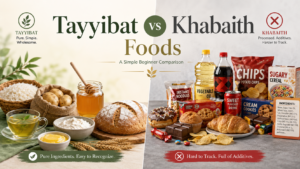
Tayyibat vs Khabaith is the core food principle behind the Al-Tayyibat system.
If you are new to the Al-Tayyibat Diet, this concept is the best place to start.
Instead of asking only, “How many calories does this food contain?” the Al-Tayyibat framework asks a different question:
Is this food pure, simple, recognizable, and easy to build meals around — or is it processed, altered, confusing, and high-friction?
This guide explains what Tayyibat and Khabaith foods mean, gives simple examples, and shows beginners how to apply the idea safely.
What Is Tayyibat vs Khabaith?
What Is Tayyibat vs Khabaith?
What Does Tayyibat Mean?
Tayyibat refers to things that are pure, wholesome, clean, and good.
In the context of food, Tayyibat foods are usually simple, recognizable, and less processed. They are foods that are easier to understand and easier to build meals around.
Common qualities of Tayyibat foods include:
- Pure and simple
- Easy to recognize
- Traditionally prepared
- Short ingredient list
- Built from basic foods
- Easier to use in simple meals
The beginner’s goal is not perfection. The goal is to return to foods that are simpler and less confusing.
What Does Khabaith Mean?
Khabaith refers to things that are impure, corrupted, harmful, or burdensome.
In the context of food, Khabaith foods are usually highly processed, industrially altered, full of additives, or difficult to recognize as basic ingredients.
Common qualities of Khabaith foods include:
- Highly processed
- Full of additives
- Industrially altered
- Long ingredient list
- Built from refined ingredients
- Often harder to track or understand
For beginners, Khabaith foods are usually the first foods to remove or reduce when trying to simplify the diet.
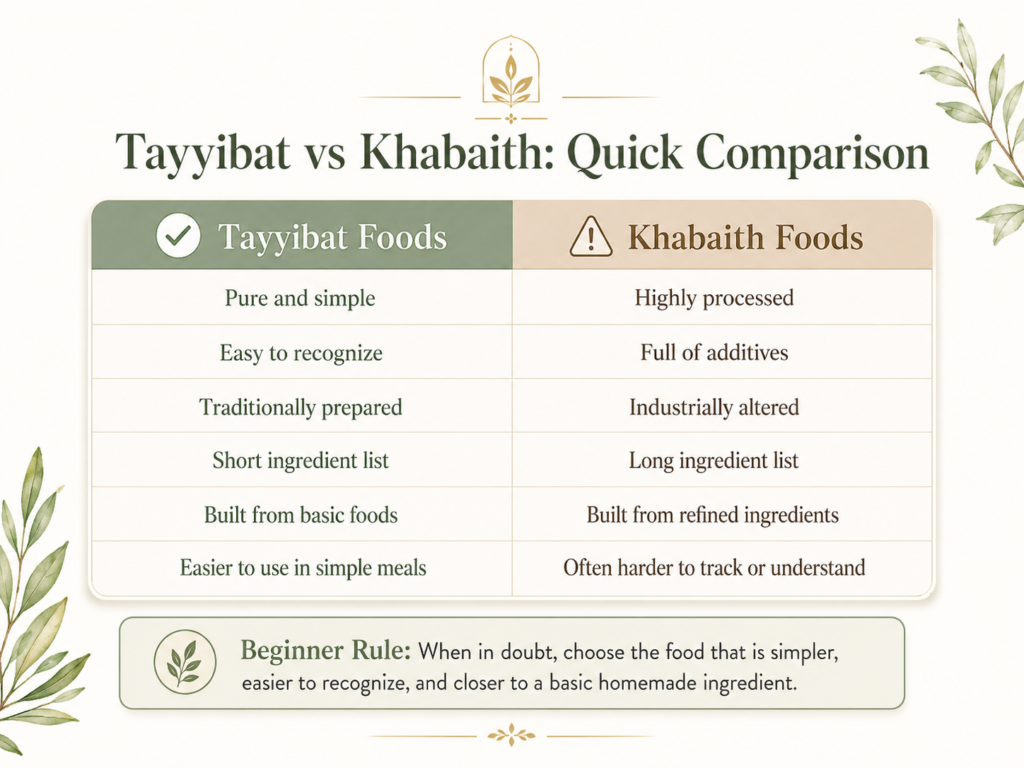
Tayyibat vs Khabaith: Simple Comparison
| Tayyibat Foods | Khabaith Foods |
|---|---|
| Pure and simple | Highly processed |
| Easy to recognize | Full of additives |
| Traditionally prepared | Industrially altered |
| Short ingredient list | Long ingredient list |
| Built from basic foods | Built from refined ingredients |
| Easier to use in simple meals | Often harder to track or understand |
Common Examples of Tayyibat Foods
Tayyibat foods are usually simple staples that can be used to build predictable meals.
Examples may include:
- White rice
- Peeled potatoes
- Pure ghee
- Butter
- Homemade bread from simple ingredients
- Fresh beef
- Fresh lamb
- Fresh fish
- Liver, if appropriate for you
- Pure honey
- Seedless jam
- Plain green tea
- Simple homemade meals
These foods are not chosen because they are trendy. They are chosen because they are basic, recognizable, and easier to organize into simple meals.
Common Examples of Khabaith Foods
Khabaith foods are usually the highly processed foods beginners remove first.
Examples may include:
- Industrial seed oils
- Commercial pastries
- Ultra-processed snacks
- Packaged foods with long ingredient lists
- Artificial additives
- Artificial flavors
- Artificial colors
- Processed sauces
- Industrial baked goods
- Foods fried in vegetable oils
- Artificially flavored drinks
A simple beginner rule is this:
If the food has a long ingredient list full of unfamiliar words, choose something simpler.
Why This Difference Matters
The Tayyibat vs Khabaith idea matters because it changes how beginners think about food.
Most modern diet advice focuses on numbers:
- Calories
- Macros
- Points
- Portions
- Weight loss targets
The Al-Tayyibat system focuses first on food quality and simplicity.
Instead of asking only:
“How much can I eat?”
It asks:
“What kind of food environment am I creating for my body?”
This does not mean calories never matter. It means the system starts with a different priority: removing confusion and building meals from simple foods.
How Beginners Can Use the Tayyibat vs Khabaith Rule
You do not need to understand every detail of the system before starting.
Use these beginner steps.
Step 1: Start With the Obvious Khabaith Foods
Do not begin by debating every ingredient.
Start with the easiest categories:
- Seed oils
- Industrial pastries
- Ultra-processed snacks
- Artificially flavored drinks
- Packaged foods with long ingredient lists
Removing the obvious processed foods makes the first phase much clearer.
Step 2: Build Meals Around Simple Staples
Instead of complicated recipes, start with simple meal foundations.
A beginner meal can follow this formula:
Base + Fat + Protein + Simple Drink
Examples:
- White rice + ghee + fresh beef + water
- Peeled potatoes + butter + fish + green tea
- Homemade bread + butter + honey + warm tea
- Rice + lamb + water
The goal is not culinary perfection. The goal is clarity.
Step 3: Read Labels Carefully
Many Khabaith foods hide inside products that look healthy.
Check labels for:
- Seed oils
- Artificial flavors
- Preservatives
- Emulsifiers
- Chemical improvers
- Industrial sweeteners
- Long ingredient lists
If a product looks healthy but contains a long list of additives, choose something simpler.
Step 4: Do Not Turn This Into Fear of Food
The Tayyibat vs Khabaith framework is meant to help beginners simplify food choices.
It should not become an obsession or a fear-based approach.
No food list is perfect for every person. Some people tolerate certain foods well. Others may need more caution.
Use the system as an educational framework, not as a reason to panic about every bite.
Step 5: Pay Attention to Your Body
As you simplify meals, observe how you feel.
Useful things to track include:
- Energy after meals
- Bloating
- Digestion
- Hunger
- Sleep
- Mood
- Food tolerance
This is not meant to diagnose a medical condition. It is simply a way to become more aware of how different foods affect you.
Beginner Rule
When in doubt, choose the food that is:
- Simpler
- Easier to recognize
- Closer to a basic homemade ingredient
- Lower in additives
- Easier to prepare plainly
This rule alone can help beginners avoid many confusing food choices.
Tayyibat vs Khabaith and the 3-Day Starter Approach
For beginners, the easiest way to apply the idea is to start with a short 3-day framework.
A simple 3-day approach may include:
- Choosing a few clean staples
- Avoiding seed oils and industrial pastries
- Keeping meals repetitive and predictable
- Drinking simple drinks like water or plain green tea
- Observing digestion, energy, and comfort after meals
This is not a strict medical meal plan. It is an educational starting point.
Download the Free Al-Tayyibat Starter Kit
If you want a simple beginner’s guide, download the free Al-Tayyibat Starter Kit.
It includes:
- Beginner food list
- Tayyibat vs Khabaith quick guide
- First grocery run checklist
- 3-day starter meal framework
- Common beginner mistakes
- Safety notes before starting
Download it here:
Get the Full Al-Tayyibat System Book
The full book goes deeper into the Al-Tayyibat framework and includes the 7-Day Reset, 21-Day Protocol, food lists, shopping guidance, meal frameworks, common mistakes, and practical troubleshooting for beginners.
Learn more here:
Final Thoughts
The Tayyibat vs Khabaith principle is the foundation of the Al-Tayyibat system.
For beginners, the goal is simple:
Choose foods that are pure, simple, recognizable, and easier to build meals around. Remove the most obvious processed foods first. Keep meals simple. Pay attention to your body. And avoid extreme claims or fear-based eating.
You do not need to be perfect.
You need clarity.
Medical Disclaimer
This article is for educational purposes only and does not provide medical advice, diagnosis, or treatment. Always consult a qualified healthcare professional before changing your diet, especially if you have a medical condition, take medication, are pregnant or breastfeeding, have diabetes, or have another chronic condition.
Related guides:
About the Author
This article was reviewed and published by the Tayyibat Diet Guide Editorial Team.
Learn more about our editorial team here.