
Al-Tayyibat Diet for Bloating: What Beginners Should Know
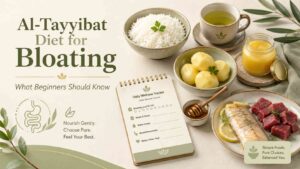
If you are curious about the Al-Tayyibat Diet for bloating, the first thing to understand is this:
Bloating can have many causes, and no diet should be presented as a guaranteed cure.
However, many beginners are interested in the Al-Tayyibat system because it focuses on simple foods, reducing processed ingredients, and avoiding foods that may feel heavy or difficult for some people to digest.
This guide explains how beginners can think about bloating through the Al-Tayyibat framework, what foods are commonly simplified first, what mistakes to avoid, and when to seek medical advice.
Important Note Before We Start
Bloating is common, but it can also be connected to medical conditions.
Speak with a qualified healthcare professional if your bloating is severe, persistent, painful, sudden, or accompanied by:
- Unexplained weight loss
- Blood in stool
- Vomiting
- Fever
- Severe abdominal pain
- Ongoing diarrhea or constipation
- Difficulty eating
- Worsening symptoms
- Pregnancy
- Known digestive disease
This article is educational only and does not provide medical advice, diagnosis, or treatment.
What Is Bloating?
Bloating usually refers to a feeling of fullness, swelling, pressure, or tightness in the abdomen.
Some people feel bloated after meals. Others feel bloated all day.
Possible causes may include:
- Eating too quickly
- Large meals
- Carbonated drinks
- Constipation
- Food intolerance
- High-FODMAP foods
- Stress
- Hormonal changes
- Gut motility issues
- Digestive disorders
- Certain medications
- Medical conditions
Because bloating has many possible causes, the safest approach is to avoid extreme claims and focus on gentle food awareness.
How the Al-Tayyibat Diet Thinks About Bloating
The Al-Tayyibat Diet is a pure food framework based on the difference between Tayyibat foods and Khabaith foods.
In simple terms:
Tayyibat foods are pure, simple, recognizable, and easier to build meals around.
Khabaith foods are processed, industrially altered, full of additives, or harder to recognize as basic ingredients.
For beginners dealing with bloating, the Al-Tayyibat approach usually starts with one practical idea:
Simplify the food environment.
Instead of trying ten supplements, complex recipes, or extreme restrictions, beginners start by removing the most obvious processed foods and building meals from simple staples.
Why Simple Meals May Help Some Beginners
Some people feel better when their meals become simpler.
This does not mean simple meals cure bloating.
It means simpler meals may make it easier to notice patterns.
For example, if you eat a meal with 20 ingredients and feel bloated, it is hard to know what caused the discomfort.
If you eat a simple meal with rice, ghee, and fresh protein, it may be easier to observe your response.
Simple meals can help beginners reduce confusion.
Food Beginners Often Simplify First
When using the Al-Tayyibat framework, beginners often start by reducing or avoiding the most obvious Khabaith foods.
These may include:
- Industrial seed oils
- Commercial pastries
- Ultra-processed snacks
- Artificially flavored drinks
- Foods fried in vegetable oils
- Packaged foods with long ingredient lists
- Processed sauces
- “Healthy” snacks full of additives
This first step is not about perfection.
It is about reducing obvious processed-food complexity.
Common Seed Oils to Watch For
Industrial seed oils are often avoided first in the Al-Tayyibat framework.
Common examples include:
- Corn oil
- Sunflower oil
- Soybean oil
- Canola oil
- Mixed vegetable oils
- Generic vegetable oil
These may appear in:
- Crackers
- Chips
- Pastries
- Packaged bread
- Sauces
- Restaurant food
- Fried foods
- Snack bars
- Processed “health” foods
A beginner’s rule is simple:
Read the ingredient list before buying packaged foods.
Simple Tayyibat Foods Beginners May Use
Beginner-friendly Al-Tayyibat foods may include:
- White rice
- Peeled potatoes
- Pure ghee
- Butter
- Fresh beef
- Fresh lamb
- Fresh fish
- Honey, if appropriate for you
- Plain green tea
- Water
- Simple homemade meals
These foods are not magic.
They are simply basic, recognizable foods that can be used to build simple meals.
A Simple Meal Formula for Bloating Awareness
If you are trying to understand your bloating patterns, use a simple meal formula:
Base + Fat + Protein + Simple Drink
Examples:
- White rice + ghee + fresh beef + water
- Peeled potatoes + butter + fish + green tea
- Homemade bread + butter + small amount of honey + warm tea
- Rice + lamb + water
The goal is not to force these foods.
The goal is to simplify meals so you can observe how your body responds.
Why Food Journaling Helps
A food journal can be more useful than guessing.
For 3 to 7 days, track:
- What you ate
- Time of meal
- Portion size
- How quickly you ate
- Bloating 30–60 minutes later
- Bloating 2–3 hours later
- Bowel movements
- Stress level
- Sleep quality
- Any discomfort
Use this simple format:
Meal:
Foods:
Bloating level 0–10:
Energy:
Digestion:
Notes:
This helps you notice patterns without making extreme assumptions.
Common Bloating Triggers to Consider
Different people react to different foods.
Some common bloating triggers may include:
- Large meals
- Eating quickly
- Carbonated drinks
- Beans and legumes
- Certain raw vegetables
- Dairy
- Wheat
- Artificial sweeteners
- Sugar alcohols
- High-FODMAP foods
- Fried foods
- Very fatty meals
- Stress while eating
The Al-Tayyibat framework often begins by simplifying processed foods first, but personal tolerance still matters.
A food can be “simple” and still not suit you personally.
What About Legumes?
Some Al-Tayyibat materials discourage beans, lentils, and chickpeas during the beginner phase because they may create digestive burden for some people.
But this does not mean every person must avoid legumes forever.
Some people tolerate legumes well. Others experience gas, bloating, or discomfort.
If legumes are important in your diet, or if you follow a restricted diet, speak with a qualified professional before removing major food groups.
What About Raw Vegetables?
Some people experience bloating from large amounts of raw vegetables, especially if they are not used to them.
This does not mean vegetables are bad.
It means preparation and tolerance matter.
Some people tolerate cooked vegetables better than raw vegetables. Others may need professional guidance if bloating is persistent or severe.
The safest beginner approach is to observe your own response rather than copy extreme rules.
What About Dairy?
Butter and ghee may appear in the Al-Tayyibat system, but dairy tolerance varies.
Some people tolerate ghee better than milk. Some tolerate butter. Others may react to dairy products.
If you notice bloating, discomfort, skin reactions, or digestive changes after dairy, pause and seek guidance if needed.
3-Day Beginner Approach for Bloating Awareness
This is not a medical meal plan.
It is a simple educational framework for observing your response to simpler meals.
Day 1
Breakfast:
Homemade bread with butter and a small amount of honey
Plain green tea or water
Lunch:
White rice with ghee and fresh beef or lamb
Water
Dinner:
Peeled potatoes with butter
Simple warm drink or water
Day 2
Breakfast:
White rice with a small amount of ghee
Plain green tea
Lunch:
Fresh fish with white rice
Water
Dinner:
Homemade bread with butter
Small amount of seedless jam, if tolerated
Day 3
Breakfast:
Homemade bread with butter and honey
Water or plain green tea
Lunch:
White rice with ghee and fresh protein
Water
Dinner:
Peeled potatoes with butter
Simple warm drink
Again, adjust foods based on your needs, tolerance, culture, and medical guidance.
Do not force any food that does not suit you.
Tips That May Help Beginners Reduce Meal-Related Bloating
These general habits may help some people:
- Eat slowly
- Chew well
- Avoid rushing meals
- Avoid very large meals
- Reduce carbonated drinks
- Keep meals simple
- Avoid snacking constantly
- Read ingredient labels
- Track your response
- Reduce ultra-processed foods
- Seek medical help for persistent symptoms
These are not Al-Tayyibat rules only. They are common beginner-friendly digestion habits.
What Not to Do
Avoid these mistakes:
Do Not Self-Diagnose
Bloating can have many causes. Do not assume you know the cause without proper guidance.
Do Not Remove Too Many Foods at Once
Extreme restriction can make your diet stressful and nutritionally limited.
Do Not Ignore Warning Signs
Pain, bleeding, weight loss, vomiting, fever, or severe symptoms require medical attention.
Do Not Treat the Diet as a Cure
The Al-Tayyibat framework is educational. It is not a guaranteed treatment for digestive problems.
Do Not Become Afraid of Food
The goal is clarity, not fear.
When to Seek Medical Advice
Seek medical advice if bloating is:
- Severe
- Persistent
- Getting worse
- Painful
- Paired with vomiting
- Paired with blood in stool
- Paired with unexplained weight loss
- Paired with fever
- Affecting daily life
- Connected to medication changes
- Happening during pregnancy
A qualified professional can help rule out medical causes and guide you safely.
Download the Free Al-Tayyibat Starter Kit
If you want a simple printable beginner guide, download the free Al-Tayyibat Starter Kit.
It includes:
- Beginner food list
- Tayyibat vs Khabaith quick guide
- First grocery run checklist
- 3-day starter meal framework
- Common beginner mistakes
- Safety notes before starting
Download it here:
Get the Full Al-Tayyibat System Book
The full book goes deeper into the complete Al-Tayyibat framework and includes the 7-Day Reset, 21-Day Protocol, food lists, shopping guidance, daily meal frameworks, common mistakes, and troubleshooting for beginners.
Learn more here:
Related Guides
Read these next:
Al-Tayyibat 3-Day Starter Plan
Al-Tayyibat Grocery Shopping Guide
Final Thoughts
The Al-Tayyibat Diet for bloating should be approached carefully and realistically.
The system may help some beginners simplify their meals, reduce processed foods, and observe food patterns more clearly.
But bloating can have many causes, and no article or food list can replace medical advice.
Start gently. Keep meals simple. Track your response. Avoid extreme restriction. And seek professional guidance when symptoms are persistent, severe, or concerning.
Medical Disclaimer
This article is for educational purposes only and does not provide medical advice, diagnosis, or treatment. Always consult a qualified healthcare professional before changing your diet, especially if you have digestive symptoms, a medical condition, take medication, are pregnant or breastfeeding, have diabetes, or have another chronic condition.
About the Author
This article was reviewed and published by the Tayyibat Diet Guide Editorial Team.
Learn more about our editorial team here.